Last updated October 15, 2026
How to Hire a ADU Contractor in Santa Clarita: A Step-by-Step Guide
The contractor who hands you the lowest bid in Santa Clarita is usually the one who left the most out of it. That missing scope doesn’t vanish; it turns into a change order six months later, after California’s ADU permitting process has you locked in and legally obligated. This guide teaches you to read contractor behavior the way a good contractor reads blueprints: carefully, and with attention to what’s not on the page. By the end, you’ll know exactly which three documents to request before signing anything, which questions expose how a builder handles surprises, and how to spot a Santa Clarita ADU sales pitch that’s designed to close you before the permit is even submitted.
Quick Answer
To hire an ADU contractor in Santa Clarita, request a written scope of work, a line-item cost breakdown, and CSLB license verification before any paid agreement. Interview at least three contractors using questions that reveal how they handle change orders, warranties, and site-specific surprises. Choose the builder who documents their price in writing before work begins, not the one who promises the lowest number verbally.
Table of Contents
- The Three Documents to Request Before Any Paid Agreement
- How to Verify a Santa Clarita Contractor’s License and Permit History
- Interview Questions That Reveal How a Contractor Handles Surprises
- What a Legitimate ADU Warranty Covers and What It Quietly Excludes
- Five Red Flags in Santa Clarita ADU Sales Pitches
- What Santa Clarita ADUs Actually Cost: A Realistic Breakdown
- The Step-by-Step Hiring Process from First Call to Signed Contract
- Common Mistakes to Avoid
The Three Documents to Request Before Any Paid Agreement
Most ADU budget collapses in Santa Clarita start the same way: a contractor promises a number over the phone or in a two-page proposal, the homeowner signs, and then “unexpected conditions” appear once demolition starts. The gap between a verbal price and a written, line-item scope is where five-figure surprises live. You close that gap by requesting three documents before you pay for anything beyond a design consultation.
First: a written scope of work. This is not a proposal. A proposal says “build a 600-square-foot one-bedroom ADU.” A scope of work says exactly what that includes: foundation type, framing lumber grade, insulation R-values, drywall finish level, flooring material and square footage, window count, door hardware, paint coats, rough-in plumbing locations, electrical panel requirements, and site cleanup standards. If a builder resists putting this in writing, that’s the entire answer. In our experience, a contractor who won’t document scope before payment is planning to define it later, at your expense.
Second: a line-item cost breakdown. This is different from a total price. A line-item breakdown separates site preparation from foundation from framing from mechanical systems from finishes. You want to see numbers next to each phase. This lets you compare bids honestly. One Santa Clarita contractor might quote $280,000 for a two-bedroom ADU while another quotes $225,000. The line-item breakdown tells you whether the difference is the builder’s margin or a missing seismic upgrade, omitted insulation, or a finish allowance for a kitchen that doesn’t exist in the actual plan.
Third: proof of an active CSLB license with the correct classification. In California, an ADU build requires a General Building Contractor with a “B” classification. A specialty contractor holding only a “C” license for, say, concrete or framing cannot legally contract the whole job. Ask for the license number, then verify it on the Contractors State License Board website yourself. Look for the classification, the issue date, and any actions or complaints. A brand-new license isn’t disqualifying, but a license with a documented history of mechanics liens should be.
How to Verify a Santa Clarita Contractor’s License and Permit History
The CSLB check is step one. The Santa Clarita permit history check is step two, and almost nobody does it. The city’s online permit portal allows you to search for building permits by contractor name or license number. What you’re looking for is a pattern, not a single data point.
A contractor who has pulled permits for multiple ADUs in Santa Clarita over several years has navigated the city’s specific requirements repeatedly. They know how the planning department reviews side and rear setback variances. They know which canyon neighborhoods trigger additional geologic review because of slope stability concerns. They know that some HOA communities in Saugus and Valencia have their own architectural review committees layered on top of city permits, which adds weeks to the timeline. That accumulated knowledge is invisible in a bid but shows up in the permit history.
Here’s what to look for when you search the portal:
- Frequency: One or two ADU permits in five years suggests a builder new to the process. Ten or more suggests someone who has learned from past inspections.
- Recency: No permits in the last two years could mean the contractor left the market, changed focus, or operates under a different name now.
- Completion rate: Permits that were pulled but never received final inspection are a red flag. It means the project stalled, the homeowner ran out of money, or the contractor walked away.
- Violation notices: Stop-work orders or correction notices are normal on complex builds, but a pattern of them suggests disorganization.
You should also ask the contractor directly: “Can you walk me through the last three Santa Clarita ADU permits you closed, including how long each took from submittal to final inspection?” A builder who can answer this without pausing has the process in their bones. A builder who says “every job is different” and changes the subject is admitting they don’t track their own outcomes.
Interview Questions That Reveal How a Contractor Handles Surprises
No ADU goes exactly to plan. Santa Clarita lots have surprises: decomposed granite that shifts excavation costs, sewer laterals that sit shallower than expected, power lines that force a trench different from the one on the site plan. The question isn’t whether surprises will happen. The question is how the contractor’s process handles them when they do.
The most important interview question you can ask is this: “When you discover something on site that isn’t in the original scope, what happens next?” The answer should be a process, not a reassurance. A good answer sounds like: “We photograph it, we write it up as a change order with a specific price, and no work continues until you’ve seen the number and signed off.” A bad answer sounds like: “We just handle it and work it into the final bill.” That’s not flexibility. That’s an open checkbook.
Here are five more interview questions that surface how a builder actually operates:
- “Will change orders require my written approval before work continues?” If the answer is anything other than an unqualified yes, end the interview. A contractor who reserves the right to keep working after an unapproved change is a contractor who controls your budget, not the other way around.
- “Who will be on site every day, and do I get a direct phone number for that person?” ADU builds last four to eight months. You need a consistent point of contact, not a rotating cast. If the contractor can’t name a project lead, your build will be managed by voicemail.
- “How do you protect the inside of my home during construction?” This is the question that separates builders who think about families from builders who think about square footage. The right answer includes shoe covers, drop cloths, dust barriers, and a daily clean-up standard. You can learn a lot about how a contractor will treat your ADU by how they describe treating your existing home.
- “What prep work happens before you submit the permit?” A strong contractor surveys the site, reviews the city’s zoning and setback requirements, checks for HOA overlays, and confirms utility locations before drawing plans. A weak contractor draws plans first and discovers the constraints later. That order of operations matters.
- “Can you show me the written warranty you include, not just describe it?” Most builders will describe a warranty verbally. Fewer will hand you the actual document during the interview. The ones who do are the ones who honor it.
One more thing: pay attention to whether the contractor asks you questions. A good builder wants to know how you’ll use the ADU, whether aging parents need step-free access, whether you’re planning to rent it, what your kids’ schedules look like. A builder who only talks about their own process is not listening to your constraints.
What a Legitimate ADU Warranty Covers and What It Quietly Excludes
ADU warranties in California vary widely, and the differences are hidden in the exclusions. Here’s what to know before you compare warranty language.
A legitimate ADU warranty should cover at least two things in writing: structural work (foundation, framing, roof) for a meaningful period, and workmanship (everything the contractor touched) for at least one year. Some builders extend workmanship coverage to two or three years. Structural coverage often runs ten years, which aligns with California’s statute of repose for latent construction defects.
What most warranties quietly exclude:
- Finishes. Paint, caulking, and drywall touch-ups are often excluded after six months. Cosmetic settlement cracks are usually classified as “normal” and not covered.
- Grading and drainage. If the lot settles and water pools against the foundation two years after completion, many warranties exclude the cost of regrading because soil movement is “site-specific.” Ask for written language on this.
- Subcontractor work. Some general contractors exclude anything installed by subcontractors, which is effectively everything: electrical, plumbing, HVAC, roofing. You need a warranty that flows through to subcontractor work.
- Appliance and fixture defects. These are usually covered by manufacturer warranties, not the contractor. That’s standard, but the contractor should coordinate the claim, not hand you a phone number.
- Site preparation and demolition: $10,000 to $30,000, depending on access, existing structures, and soil conditions. Canyon lots with retaining walls push this higher.
- Foundation: $15,000 to $35,000. Slab-on-grade is most common in Santa Clarita, but sloped lots in areas like Sand Canyon can require stem walls or piers.
- Framing and structure: $30,000 to $70,000 for a stick-built unit. Prefab units move some of this cost into the factory price.
- Mechanical systems (electrical, plumbing, HVAC): $25,000 to $50,000. This includes the panel upgrade many older Santa Clarita homes need, which alone can run $4,000 to $8,000.
- Interior finishes: $40,000 to $90,000. Kitchen and bathroom are the big drivers. This range assumes mid-grade fixtures and standard finishes, not budget-grade or luxury.
- Permits, fees, and design: $10,000 to $25,000. City of Santa Clarita impact fees for ADUs are lower than for primary residences, but plan-check, school fees (if applicable), and engineering costs still add up.
- Call three to five contractors and request a site visit. During the first call, ask about their current project load, their permit process, and whether they’ll provide a written scope before asking for a deposit. Take notes. The way they answer the phone and the questions they ask on that first call tells you a lot about how they’ll run your project.
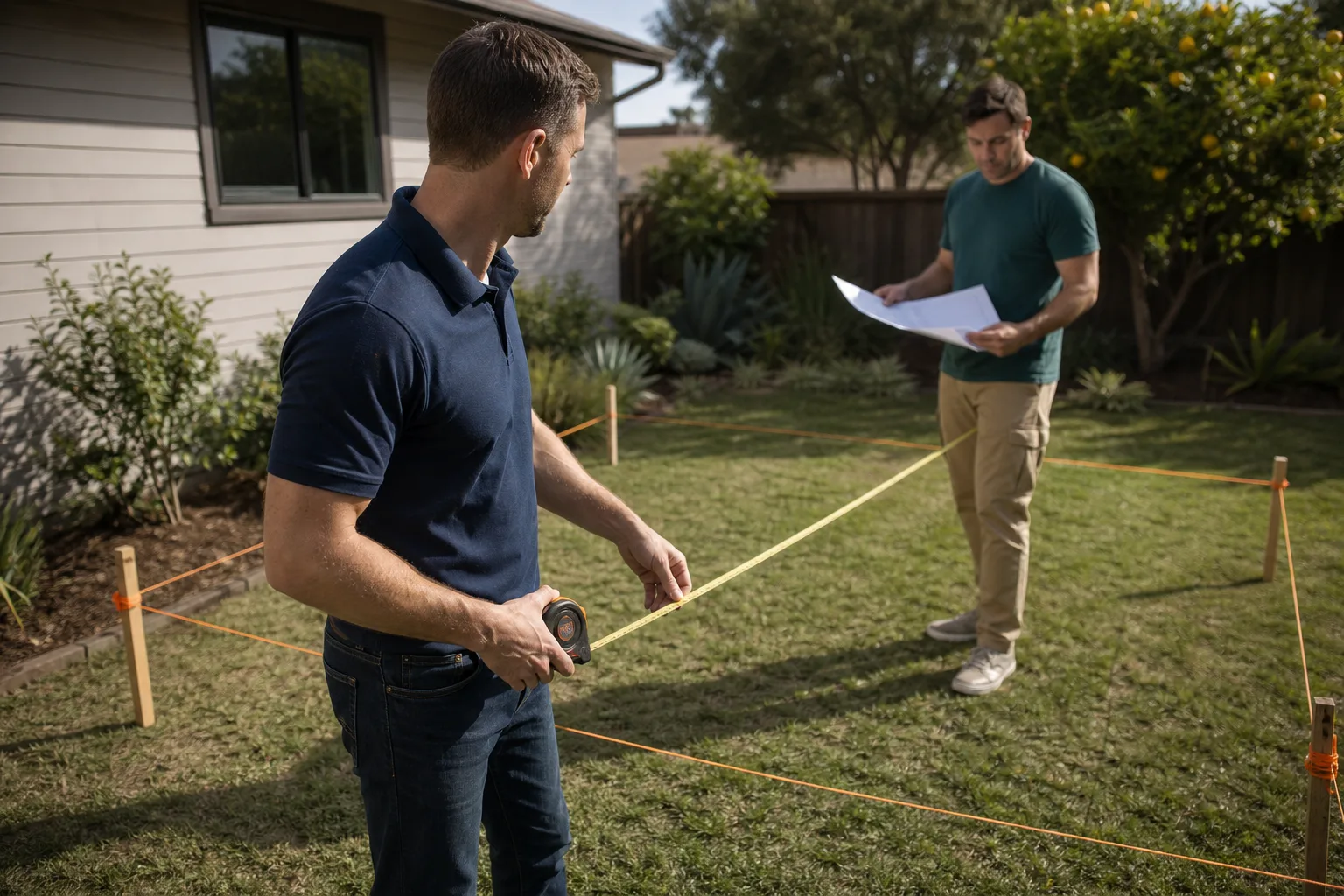
- Conduct the site visit without signing anything. A good builder walks your lot, asks about your goals, takes measurements, and points out constraints you haven’t considered: setback lines, utility locations, slope concerns, HOA rules. A bad builder talks for 45 minutes about their portfolio and leaves without measuring anything.
- Request the three documents: written scope of work, line-item cost breakdown, and CSLB license verification. Do this for every bidder, not just your favorite. Comparing documents side by side is the only honest way to compare builders.
- Verify permit and license history through the city and CSLB. This takes an hour. It’s the most valuable hour in the entire hiring process. Look for patterns: frequent ADU permits, completed inspections, few violations.
- Call three references from Santa Clarita, not from another city. Ask the hard questions: “Did the final price match the written price?” “How did they handle change orders?” “Was the site clean at the end of each day?” “Would you hire them again?” Listen to what people say before they answer the question: a pause, a sigh, a caveat.
- Review the warranty document in writing before signing. If the warranty is short, ask for a longer one in writing. If it excludes finishes and grading, ask whether that language can be amended. If the answer is no, ask yourself whether you’re comfortable signing a document that commits you to a five-figure risk with no written remedy.
- Sign the contract, then confirm the permit submittal plan and payment schedule. A defensible payment schedule ties payments to milestones: deposit (ideally 10% or less), foundation complete, framing complete, drywall complete, final inspection passed. Never pay large sums before work is done. Never pay everything up front.
- Comparing bids without comparing scopes. A $250,000 bid that includes seismic upgrades, a 200-amp panel, and a finished kitchen is not more expensive than a $200,000 bid that excludes all three. Compare line items, not totals.
- Signing before seeing the written scope. Signing a contract that says “ADU per plans” without attaching the plans or a scope document means you’ve agreed to whatever the builder decides the plans mean. The contract is the scope. Make it explicit.
- Choosing the newest, shiniest rendering. Renderings are not plans. They’re pictures. Many a homeowner has fallen in love with a rendering only to learn that the roofline violates the setback, the window faces a retaining wall, or the kitchen layout doesn’t fit the actual foundation footprint. Demand plans, not pictures.
- Paying a large deposit before the permit is submitted. Once the builder has your money, the incentive structure shifts. A builder holding a large deposit is in no hurry to correct a change order price. Keep deposits small and tie remaining payments to visible milestones.
- Ignoring the permit history check. An hour on the city portal can prevent a six-month ordeal. A contractor with a history of unpermitted work, abandoned permits, or violation notices is not going to change their process for your project.
- Believing a warranty that isn’t in writing. Verbal warranty promises are worth the paper they’re printed on. If the warranty document doesn’t exist, neither does the warranty.
- Selecting the lowest bid and then hoping for the best. The lowest bid in Santa Clarita is often the one with the most exclusions. A low bid plus change orders equals a high final price. Choose the bid that’s honest, documented, and complete, even if it’s not the lowest number at the table.
Ask the contractor to show you the actual warranty document, not a summary. Read the “Exclusions” section out loud if you have to. If a builder’s warranty is one paragraph, it’s not a warranty; it’s a sentence. One more note for Santa Clarita homeowners: our climate means summer heat and winter temperature swings. Expansion and contraction show up as small cracks at drywall joints within the first year. That’s normal. What’s not normal is a warranty that dismisses all cracking as “settling” without defining the threshold. Get the threshold in writing.
Five Red Flags in Santa Clarita ADU Sales Pitches
ADU sales pitches are optimized to get you to sign quickly. Here are the specific tells we’ve seen in Santa Clarita that signal a pitch built for the salesperson’s calendar, not your project.
One: renderings before a site visit. A 3D rendering of your ADU can only be accurate if the builder has walked your lot, measured your setbacks, checked your elevation, and reviewed your HOA constraints if you have them. A rendering delivered within 48 hours of first contact, before anyone has set foot on your property, is marketing. It’s an image designed to get you emotionally attached to an idea that may not survive contact with your actual lot. The builder who renders before visiting is selling a vision, not a buildable structure.
Two: verbal price guarantees. “I can build that for $220,000” means nothing if it’s not attached to a written scope. Verbal prices are not prices. They’re anchors. They set a number in your head so that when the real number arrives later, it feels like a problem rather than a correction. In Santa Clarita, where lot conditions vary block by block from Valencia to Canyon Country, a verbal price is a guess dressed as a promise.
Three: pressure to sign before the permit is submitted. Some contractors want a signed contract and a deposit before they’ll prepare the permit package. Run from this. The permit package is where the project becomes real: plans, engineering, energy calculations, site plan. A contractor who requires a commitment before doing this work is asking you to buy something that doesn’t exist yet. A reasonable process is: site evaluation, preliminary design, permit package preparation, then contract signing, then submittal. If signing comes first in their process, your leverage ends the moment you sign.
Four: the “we have a crew available now” line. Good Santa Clarita ADU builders have project schedules. They can quote you a start window measured in weeks or months, not “tomorrow.” A contractor who claims immediate availability in a market where demand is steady is telling you something about their backlog, and it’s not flattering. Crews sit idle for a reason.
Five: no references from current or completed ADU projects. Ask for three Santa Clarita homeowners whose ADUs the contractor completed in the last two years, with phone numbers. If the builder hesitates, that’s the answer. A builder with an empty reference list in a city where hundreds of ADUs are built every year is not the builder you’re looking for.
What Santa Clarita ADUs Actually Cost: A Realistic Breakdown
Price ranges help you plan before you call. Here’s what we see across Santa Clarita in 2025, based on projects from Valencia to Newhall to Saugus.
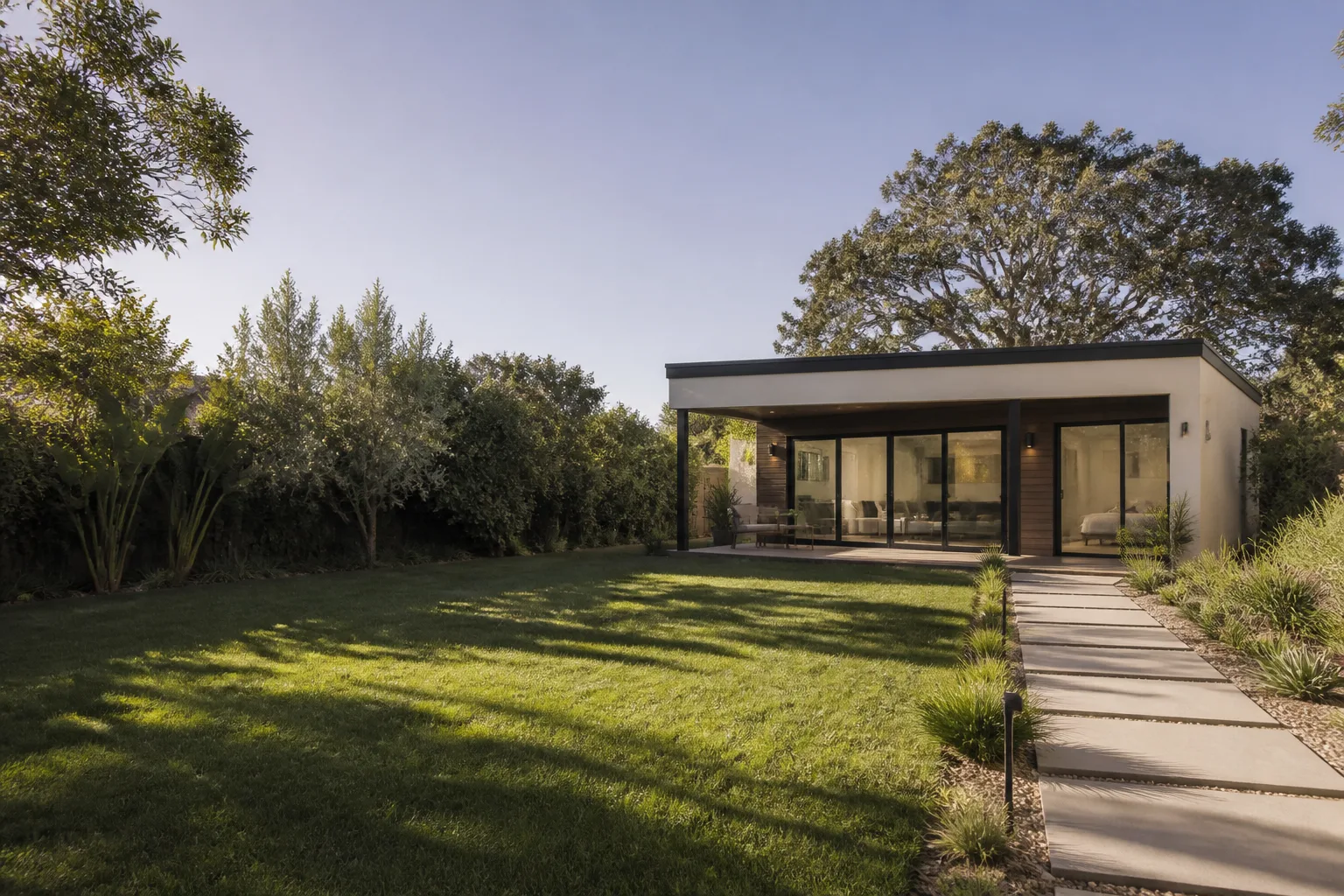
An attached conversion (converting an existing garage into an ADU) runs $120,000 to $220,000 depending on condition, electrical, plumbing, and finish level. A detached one-bedroom ADU of roughly 400 to 600 square feet runs $180,000 to $300,000. A detached two-bedroom of 700 to 900 square feet lands between $250,000 and $400,000. Prefab and modular ADUs, where the structure is built off-site and assembled on your lot, can reduce on-site construction time but not necessarily total cost; expect $200,000 to $350,000 for a quality prefab unit with site work, foundation, utility connections, and permits included.
Here’s how those totals typically break down:
These ranges assume a written, line-item scope. If a builder quotes you below these numbers, ask what’s missing. If they quote above, ask what’s included. Either way, you’re having a real conversation instead of comparing apples to renderings.
We should note: if your goal is a larger addition rather than a standalone unit, the cost conversation changes. Our Home Addition Contractor in Santa Clarita guide covers those numbers in depth.
The Step-by-Step Hiring Process from First Call to Signed Contract
Here’s the full process, step by step, in the order a good Santa Clarita ADU project should follow.
Once you’ve signed, keep your communication in writing. Email, not phone calls, for questions about scope, schedule, and cost. A paper trail protects you in ways that memory cannot.
If you’re weighing an ADU against a garage conversion, the decision is different from what most people assume. Our guide to Garage Conversion Contractor in Santa Clarita walks through the trade-offs in more detail.
And if you’re still deciding whether an ADU is right for your lot versus a full addition, start with ADU Builders in Santa Clarita to understand what’s possible on your specific property.
Common Mistakes to Avoid
When to Call a Professional
You should call an ADU contractor the moment you start taking the idea seriously, even before you know your exact budget or layout. A good builder helps you figure out what’s feasible on your specific lot, what city and HOA requirements apply to your neighborhood, and what a realistic budget looks like for your goals. A site visit and written scope cost nothing but can save you from designing a project around a number that was never real. If you’re considering a prefab or modular ADU and want to understand the trade-offs between Abodu, Cover, Dvele, or Mighty Buildings products, that’s also a conversation worth having early. Seedling ADU Santa Clarita offers free estimates and written scopes in Santa Clarita. Call (661) 362-8059 to schedule yours.
Frequently Asked Questions
Hiring an ADU contractor in Santa Clarita typically costs $180,000 to $400,000 total, depending on the size of the unit, whether it’s attached or detached, and the finish level. Garage conversions run $120,000 to $220,000. The contractor’s fee is included in that total, not added on top. Get a written line-item breakdown before comparing bids. Call (661) 362-8059 for a free written estimate specific to your lot.
Permitting typically takes two to six months in Santa Clarita, depending on plan-check workload, HOA review if applicable, and site-specific requirements. Construction then takes four to eight months for a stick-built ADU and three to six months for a prefab unit after site work. Total timeline from first call to final inspection is usually seven to fourteen months. A contractor’s permit history can show you their typical timeline on past Santa Clarita projects.
Yes, most attached garages in Santa Clarita can be converted into ADUs, subject to zoning, setback, and building code requirements. The cost runs $120,000 to $220,000 for a typical one-bedroom conversion, including electrical, plumbing, insulation, and finishes. Some older garages need structural reinforcement, which adds cost. See our full guide on Garage Conversion Contractor in Santa Clarita for details.
Yes, every ADU in Santa Clarita requires a building permit, and most require design review through the city’s planning department. Working without a permit puts you at risk of fines, stop-work orders, and problems when you sell the home. A legitimate contractor pulls permits before any work begins. Verify the permit history of any builder you’re considering through the city’s online portal.
A stick-built ADU is framed on site, like a traditional home. A prefab ADU is built in a factory, delivered to your lot in modules, and assembled on your foundation. Prefab can reduce on-site construction time by several weeks, but you still need site work, foundation, utility connections, and permits. Brands like Abodu, Cover, and Dvele offer different approaches, and site conditions in Santa Clarita, including lot access and slope, determine which works. Both styles can produce a high-quality finished unit. The choice is about fit for your lot and your timeline, not about inherent quality.
No. You should not pay more than a small deposit, typically 10% or less, before the permit package is submitted. The design, engineering, and permit preparation work happens before submittal, and a good contractor does that work as part of earning your project. A contractor who demands a large deposit before the permit is submitted is asking you to fund their pipeline, not your ADU. Tie all subsequent payments to completed milestones.
Common Mistakes to Avoid
We covered eight specific mistakes earlier in the guide. Here’s the short version for quick scanning: compare scopes, not totals. Sign contracts that include written scopes of work. Verify license and permit history. Require written approval for every change order. Get warranties in written form. Tie payments to milestones. And remember that the lowest bid is often the one with the most left out.
The Bottom Line
Hiring an ADU contractor in Santa Clarita is about behavior, not just credentials. The builder who shows up to your lot and measures it before promising anything, who writes down a scope of work and a line-item price before asking for payment, who can hand you a written warranty and a permit history and a list of local references, is the builder who treats your project like a real build instead of a sales target. Choose the builder whose process protects you in writing. That’s the whole job.
Written by Ben Ortega, Owner at Seedling ADU Santa Clarita, serving Santa Clarita since 2001.
Ready to talk specifics? Call (661) 362-8059 to schedule your free estimate with Seedling ADU Santa Clarita home, or explore Home Addition Contractor in Santa Clarita if you’re weighing an addition as an alternative.