James Hardie New Detached ADU: The Santa Clarita Owner’s Guide
We stock and install James Hardie siding, trim, and weather barrier components for new detached ADUs throughout Santa Clarita, with most materials matched to your existing Hardie product line within one business day. Installed parts pricing typically runs $240 – $1,900 depending on what failed, though full siding replacement on an ADU wall runs higher. Most owners discover the problem the same way: a corner piece has pulled away after a Santa Clarita wind event, or a bottom course of lap siding is wicking moisture and swelling after a wet winter.
What makes James Hardie different from other siding products matters when a part fails. HardiePlank and HardiePanel are fiber cement, not wood or vinyl. They don’t rot the way wood does, but the edges and fasteners have their own failure patterns here in the Santa Clarita Valley, where summer temperatures climb past 100°F and the nights drop into the 40s. If you’re seeing a crack, a gap, or a rust stain, you’re not looking at a cosmetic issue. You’re looking at a moisture path that will travel.
Which James Hardie Models This Applies To
Most new detached ADUs in Santa Clarita are built with one of three James Hardie product families: HardiePlank lap siding (the 5.25″ and 7.25″ exposure widths), HardiePanel vertical siding (4×8 and 4×10 sheets), and HardieTrim boards (the 1×4, 5/4×4, and 5/4×6 profiles used at corners, windows, and the roofline). The failure-prone parts are almost always at the transitions: where panel meets trim, where trim meets stucco, and where a bottom course sits close to grade.
Here’s the spec detail that matters: James Hardie requires a 6″ clearance from the bottom edge of siding to finished grade, and a 1/8″ gap at all trim and corner joints. When a crew rushes an ADU and sets siding closer than that, the fiber cement acts like a wick in Santa Clarita’s occasional heavy rain. HardieTrim also comes in either primed or factory-painted colors, and not every supplier stocks both. If your ADU was built with a specific Hardie color, like Cobble Stone or Monterey Taupe, the replacement trim board needs to match or be site-painted, which changes the labor equation.
We carry both OEM James Hardie components and quality aftermarket equivalents where they make sense, like stainless steel corner flashing and proper fiber-cement-rated fasteners. James Hardie specifies hot-dipped galvanized or stainless nails, not standard roofing nails. The wrong fastener is the single most common reason a Hardie part fails early in Santa Clarita, because temperature swings cause the siding to move and ordinary nails shear.
Signs Your James Hardie New Detached ADU Is Failing
- Bottom edge swelling or discoloration: This means the siding is sitting too close to grade or sprinkler overspray is hitting it repeatedly. Fiber cement absorbs water at cut edges, and the damage is not reversible, so the affected boards need replacement.
- Corner trim pulling away from the wall: In Santa Clarita’s dry heat, the framing behind the trim contracts, and short nails lose their grip. You’ll see the gap widest at the top or bottom corner. This is a fastener problem, not a Hardie product defect, and a properly re-fastened corner will stay put.
- Cracks running vertically through the middle of a board: This usually traces back to the board being nailed too close to the edge or nailed directly into a framing gap. Fiber cement is rigid; it doesn’t flex like vinyl. Once cracked, the board lets water reach the sheathing behind it.
- Rust streaks staining down from nail heads: This tells us the builder used standard steel nails instead of the galvanized or stainless fasteners Hardie requires. Every one of those fasteners will eventually fail, not just the ones currently rusting.
- Caulk lines separating at trim joints: Hardie requires the gap at trim intersections to be left open and flashed, but many crews caulk it instead. In Santa Clarita’s heat, caulk hardens and splits within a few seasons. The proper fix is flashing, not more caulk.
Replacement Cost & What’s Included
For a new detached ADU in Santa Clarita, here’s what we quote based on the work we’ve completed across Valencia, Saugus, Canyon Country, and Newhall:
- Single HardieTrim board replacement (corner or window trim): $240 – $420 installed
- Single HardiePlank course replacement (up to 12 linear feet): $380 – $680 installed
- Bottom course replacement with proper 6″ clearance correction: $900 – $1,600 installed
- Full HardiePanel sheet replacement (one 4×8 sheet): $520 – $850 installed
- Fastener replacement on an existing elevation (remove and re-fasten with correct hardware): $700 – $1,400 installed
- Full ADU wall siding replacement (one wall, prepped and painted): $2,800 – $5,200 installed
Every quote is written before we start, and it includes removal, disposal, the replacement Hardie material, correct fasteners, flashing where needed, and touch-up paint matched to your existing color. We don’t add change orders once work begins. The 365-Day Done Right Promise covers the workmanship on every one of these repairs. If something we installed doesn’t hold up within the first year, we return and correct it without a second invoice.
What drives the price up: hard-to-access locations like a second-story adjoined wall, scaffolding requirements, hidden water damage behind the siding that requires sheathing repair, and repainting large areas for color match. We’ll tell you before we touch anything if we find more than what the quote assumed.
DIY or Call Us?
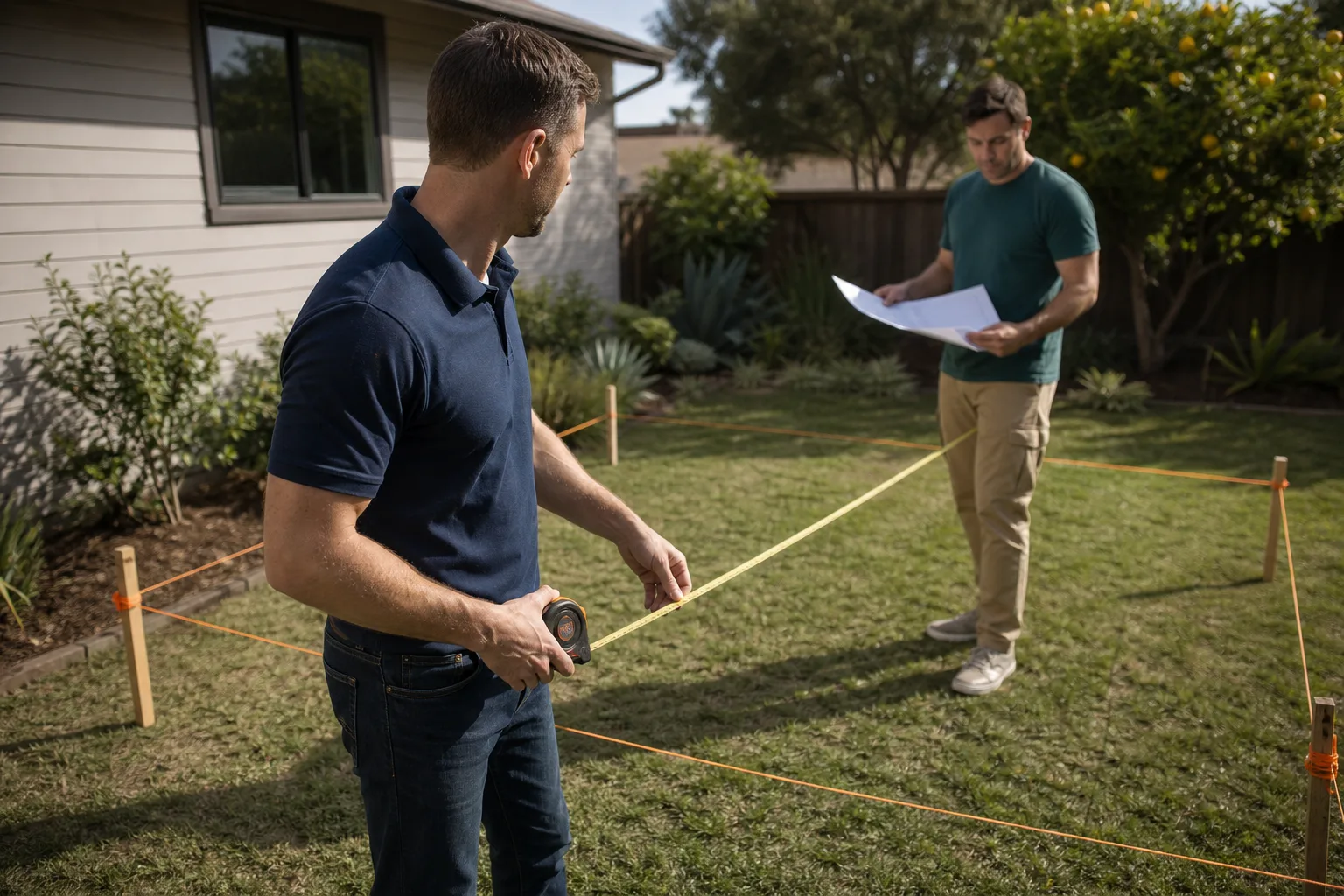
You can safely inspect your ADU yourself. Check the bottom clearance from siding to grade with a tape measure. Look at nail heads for rust. Wiggle the bottom corners of the trim boards gently. None of that puts you at risk. Replacing fiber cement siding, however, is not a casual weekend project. HardiePlank boards are heavy, they create silica dust when cut, and a wrong cut or a bad fastener means you’ve spent your Saturday creating a larger water problem than you started with.
If you’d rather hand it to a crew who does this every week, call us at (661) 362-8059. Ben Ortega and our team will come out, measure, give you a written price, and leave the ADU better than we found it, with a photo of the clean-up before we drive away.
FAQs
James Hardie fiber cement siding is rated for 50 years under normal conditions, but the service life in Santa Clarita depends heavily on correct installation, proper clearance from grade, and correct fasteners. The Hardie product itself won’t rot, but bad installation can cause failure within 5 – 10 years. If you’re seeing problems now, it’s worth having us look, because most common failures are fixable. Call (661) 362-8059 for a free inspection and written estimate.
No. Fiber cement cannot be patched successfully; a cracked or swollen James Hardie board needs to be removed and replaced. Attempting to seal or paint over the crack leaves the water path open behind the siding. The replacement cost is usually less than people expect, and we’ll give you a firm number before starting. Call (661) 362-8059 to schedule a look.
Most single-part replacements, like one trim board or one lap siding course, are completed the same day we arrive. A bottom course correction with grade clearance work usually takes one to two days. Larger wall replacements can take three to five days depending on drying time for paint.
We maintain common James Hardie trim profiles, lap siding widths, panel sheets, and the correct galvanized and stainless fasteners in our Santa Clarita inventory. For less common factory-painted colors, we source from our supplier network and typically have the material on hand within one business day. We also work with Abodu, Cover, and Dvele ADU models, so if your unit came from a prefab manufacturer, we can match the spec. Call (661) 362-8059 and we’ll confirm the part on the spot.
Written by Ben Ortega, Owner, Seedling ADU Santa Clarita at Seedling ADU Santa Clarita, serving Santa Clarita and nearby areas.