Last updated October 15, 2026
ADU Warning Signs: A Santa Clarita Homeowner’s Reference Guide
A hairline crack running diagonally from the corner of an ADU window is not cosmetic. It’s the building telling you exactly where stress is concentrating, and whether it matters depends on which direction it runs and how fast it’s moving. Most ADU problems visible in year three or four were readable in year one by someone who knew what to look for. This guide gives Santa Clarita homeowners a plain-language reference for the physical signs that indicate a structural, moisture, or systems issue before it becomes a repair emergency. For The Complete Guide to ADU in Santa Clarita, see our companion resource. If you own an ADU in Santa Clarita, or you’re planning to build one, this is the reference you’ll want bookmarked.
Quick Answer
The most common ADU warning signs in Santa Clarita fall into five categories: diagonal cracks at window and door corners (structural stress), efflorescence or persistent grout darkening (moisture intrusion), cabinet base swelling near plumbing walls (concealed leaks), mini-split condensate that never stops dripping (refrigerant or drainage issues), and soft subfloor spots near thresholds (foundation or framing problems). Document each sign with a dated photo and a ruler for scale, then call a licensed professional if any crack exceeds 1/8 inch in width, grows visibly within 90 days, or appears alongside any moisture indicator. Our Home Addition Contractor Maintenance Checklist for Santa Clarita Homeowners includes a printable quarterly inspection schedule.
Table of Contents
- The Crack Taxonomy: Reading Stucco and Drywall Like a Diagnostic Tool
- Moisture Warning Signs Specific to ADUs With Kitchens or Bathrooms
- Mini-Split Condensate Versus Refrigerant Issues: What Most Homeowners Misread
- Subfloor and Threshold Warning Signs: Slab Versus Raised Foundations
- Your Documentation Protocol: What to Photograph and When
- How Santa Clarita’s Climate Accelerates Specific ADU Failures
- Common Mistakes to Avoid
- When to Call a Professional
- Frequently Asked Questions
The Crack Taxonomy: Reading Stucco and Drywall Like a Diagnostic Tool
Not every crack means your ADU is failing. In Santa Clarita, where summer temperatures routinely climb past 100 degrees and winter nights can drop into the 30s, every building expands and contracts through a thermal cycle that produces hairline cracking as a normal byproduct. The skill is separating thermal movement from structural settlement, and the crack’s location, direction, and width tell you which you’re looking at.
Hairline vertical or horizontal cracks under 1/16 inch wide in drywall, especially along taped seams, are almost always thermal expansion. The drywall mud and tape expand at a different rate than the framing behind it. In a Santa Clarita ADU with a mini-split that cycles on and off throughout the day, these cracks appear within the first 12 months and stabilize. They’re cosmetic. Patch them when you repaint, and don’t lose sleep over them.
Diagonal cracks running from window or door corners are a different conversation. These form because openings in the wall create stress concentrations, and when the building shifts, the crack starts at the corner and runs outward at roughly 30 to 45 degrees. A diagonal crack under 1/16 inch that appears once and stays static for a full year is usually the building settling into its final position. A diagonal crack that widens, lengthens, or spawns a second crack branching off it is the building asking for a structural evaluation.
Stair-step cracks in stucco exterior walls follow mortar joints in a step pattern. In Santa Clarita’s dry climate, stucco cracks are often caused by shrinkage during curing rather than movement, especially in the first two years after construction. But a stair-step crack wider than 1/8 inch, or one that runs through the stucco and into the underlying framing, can indicate differential settlement: one corner of the ADU’s foundation dropping faster than the rest. If you see this pattern, mark the crack ends with a pencil and date, then recheck in 30 days.
Horizontal cracks in foundation walls or stem walls are the most serious pattern. They indicate lateral pressure, typically from expansive soil. Parts of Santa Clarita sit on clay-rich soil that swells when wet and shrinks when dry. A horizontal foundation crack wider than 1/8 inch should be evaluated by a structural engineer within weeks, not months.
A Practical Crack Decision Table
| Crack Pattern | Likely Cause | Action |
|---|---|---|
| Hairline vertical/horizontal in drywall, under 1/16″ | Thermal expansion | Monitor, patch when repainting |
| Diagonal from window/door corner, under 1/16″, static | Normal settling | Document, recheck in 90 days |
| Diagonal from corner, widening or lengthening | Active settlement | Call a structural professional |
| Stair-step in stucco, under 1/8″ | Curing shrinkage | Document, monitor |
| Stair-step in stucco, over 1/8″ or through framing | Differential settlement | Call a structural professional |
| Horizontal in foundation wall, any width | Lateral soil pressure | Structural engineer evaluation now |
In our experience building ADUs across Santa Clarita, the most common call we get about cracks comes from homeowners in Valencia and Saugus whose ADUs sit on expansive clay. The soil moves more than the homeowners expect, and cracks that would be alarming elsewhere are often within normal range here. The key is documentation and measurement, not panic.
Moisture Warning Signs Specific to ADUs With Kitchens or Bathrooms
ADUs are compact by design. The kitchen and bathroom often share a wall or sit back-to-back to conserve plumbing runs, which means a concealed leak doesn’t have far to travel before it shows up somewhere visible. In Santa Clarita’s dry air, water evaporates quickly, so a small leak can hide for months without producing obvious puddles. What it produces instead is a signature of secondary signs.
Efflorescence on exterior walls is the white, chalky deposit that appears on stucco or concrete when water moves through the material and carries dissolved salts to the surface. On an ADU, efflorescence near the base of exterior walls, especially below a bathroom or kitchen, suggests water is wicking through the wall assembly from the inside. It’s not the leak itself, it’s the leak’s calling card. A single small patch after heavy rain can be normal capillary action. A recurring or spreading patch means a plumbing connection needs inspection.
Persistent grout darkening in a shower or around a sink backsplash is another early indicator. Grout darkens when water saturates it, and if the darkening doesn’t fade within 24 to 48 hours of the last use, the grout is holding water longer than it should. That means the waterproofing layer behind the tile may have failed, or the sealant has worn away. In a small ADU bathroom that gets multiple daily uses from family or tenants, this progression happens faster than in a primary home.
Cabinet base swelling under a kitchen sink or bathroom vanity is the most reliable concealed-leak indicator. Particleboard and MDF cabinet boxes absorb water and swell permanently. If you notice a cabinet door that suddenly sticks, a toe-kick that has bowed outward, or a drawer that drags where it used to glide, check the plumbing connections inside the cabinet. The leak may be slow enough that no water ever pools visibly, but the damage is happening anyway.
What to do when you find a moisture sign:
- Photograph the sign with a ruler for scale and a date stamp.
- Run your hand along the adjacent wall and floor. Cool-to-the-touch spots suggest moisture behind the surface.
- Check the water meter. Shut off all water inside the ADU and note the reading. Wait 30 minutes. If the dial has moved, you have a leak somewhere in the system.
- Open cabinet doors and run a fan into the cavity for 24 hours to dry the area while you wait for a professional.
- Call a licensed plumber or your ADU builder if the unit is still under warranty.
We’ve walked into ADUs in Canyon Country where a shower pan leak had been slowly saturating the subfloor for eight months before the homeowner noticed the bathroom door sticking. Whether to tackle repairs yourself or hire out is covered in our DIY vs Professional ADU: The Santa Clarita Homeowner’s Decision Guide. The fix was extensive because the moisture had time to reach the framing. Caught early, that same repair would have been a reseal and a weekend of drying.
Mini-Split Condensate Versus Refrigerant Issues: What Most Homeowners Misread
Mini-split heat pumps are the default HVAC choice for Santa Clarita ADUs. They’re efficient, quiet, and sized perfectly for 400 to 1,200 square feet. They also produce condensate, which is normal. The confusion starts when homeowners can’t tell normal condensate from a refrigerant problem, and the two point to very different fixes.
Normal condensate is water that forms when warm, humid air contacts the cold evaporator coil inside the indoor unit. It drips by gravity through a drain line to the exterior, where it should exit through a dedicated pvc pipe, often near the outdoor condenser. In Santa Clarita’s summer, when the mini-split runs for hours at a time, you’ll see a steady drip from that drain line. That’s the system working correctly. A well-functioning mini-split in cooling mode can produce 5 to 20 gallons of condensate per day, depending on humidity and runtime.
Refrigerant issues look different. A mini-split low on refrigerant can’t maintain proper coil temperature, so the coil freezes. When the system cycles off, that ice melts and produces a sudden, heavy volume of water, often overflowing the drip pan and spilling down the wall below the indoor unit. If you see water stains on the drywall under your mini-split head, or a gush of water when the system shuts down, you’re likely looking at a refrigerant leak or restricted airflow, not normal condensate.
Other signs of a refrigerant problem:
- The unit runs constantly but the room doesn’t reach the set temperature.
- Ice forms on the copper line set where it enters the outdoor condenser.
- The indoor coil is visibly frosted while the system runs.
- The outdoor unit hisses or bubbles, a sound produced by refrigerant escaping under pressure.
- Electric bills climb steadily while the unit’s output stays the same or declines.
If the condensate drain line is properly sloped and clear, and the water still ends up where it shouldn’t, don’t keep resetting the unit and hoping. A refrigerant leak doesn’t heal itself, and running a mini-split low on refrigerant shortens the compressor’s life. In a Santa Clarita summer, when daytime highs hit triple digits and the unit is your ADU’s only cooling source, a refrigerant problem left unaddressed will strand you without air conditioning on exactly the day you need it most.
Subfloor and Threshold Warning Signs: Slab Versus Raised Foundations
Santa Clarita ADUs are built on two primary foundation types: post-tensioned concrete slabs and raised wood floors over perimeter stem walls. The warning signs differ between them, and so does the inspection approach. Knowing which foundation your ADU sits on shapes how you read what you’re feeling underfoot.
Slab foundations are the more common choice for modern ADUs in Santa Clarita. The floor is concrete, usually with a flooring finish applied directly or over a thin underlayment. On a slab, a soft spot underfoot almost always means the flooring material itself has failed, not the structure. Laminate planks can delaminate, engineered wood can cup, and vinyl can bubble when moisture is trapped below. What you should watch for on a slab is not softness but vertical displacement: a tile that has cracked along a straight line, a section of floor that has lifted or settled relative to the adjacent section, or a door threshold that has pulled away from the floor on one side. These indicate slab movement. In Santa Clarita’s expansive soils, slab movement is a known risk, and early signs show up at door thresholds first because that’s where two independent structural elements meet.
Raised foundations put a wood floor over a crawl space. Here, soft spots mean something different. A springy or spongy section of floor indicates the plywood subfloor has absorbed moisture and delaminated, or the joist below has begun to rot. If you can access the crawl space, look for standing water, darkened wood, or fungal growth on the joists directly under the soft spot. Don’t crawl under the structure yourself unless you’re trained and equipped; the warning signs from above are enough to justify a professional inspection.
Threshold-specific warning signs to check in both foundation types:
- The exterior door rubs against the frame at the top or latch side (frame racking).
- The threshold has a visible gap under one end (slab settlement or joist sag).
- The door swings open or closed on its own when left ajar (floor out of level).
- A crack runs from the threshold into the adjacent flooring in a straight line (differential movement).
- The weatherstripping compresses heavily at the bottom but barely touches at the top (frame deformation).
In our experience with Seedling ADU Santa Clarita home inspections, threshold movement is the single most reliable early indicator of foundation issues because it magnifies small movements into visible symptoms. A slab that settles 1/4 inch is hard to see in the middle of a room, but the same 1/4 inch at a door threshold produces an obvious change in how the door operates.
Your Documentation Protocol: What to Photograph and When
A dated, measured photographic record is the single most valuable tool a Santa Clarita ADU owner has for warranty claims, insurance disputes, and resale disclosure. It takes 15 minutes a quarter and costs nothing. What it gives you is a baseline: proof of when a crack first appeared, how wide it was, and whether it grew. Without that baseline, you’re relying on memory, and memory is not evidence.
What to photograph, at minimum:
- Every visible crack, inside and out, with a ruler or quarter placed next to it for scale. Use the same coin or ruler every time for consistency.
- Door and window thresholds from two angles: straight-on and from the side, so changes in level are visible.
- The mini-split drain line exit point and the area directly below the indoor unit, looking for water staining or mineral deposits.
- The interior of every cabinet that houses a plumbing connection, including the toe-kick area.
- Exterior walls at the base, especially after heavy rain, looking for efflorescence or water stains.
- Any grout lines in showers or backsplashes that show darkening or discoloration.
When to document: on move-in day (or the day you take ownership of the ADU), then quarterly for the first two years, then every spring and fall after that. Also document immediately after any unusual event: a heavy rainstorm, a small earthquake, a door that suddenly starts sticking, a water bill spike. In Santa Clarita, where the rainy season is concentrated between November and March, the transition from dry to wet is the highest-value documentation window because that’s when expansive soils do their moving.
How to store the records: create a folder on your phone or cloud storage labeled with the ADU’s address and the year. Name each photo with the date and the location, like “2026-03-15-crack-north-bathroom-window.” The naming convention matters more than it seems. Three years from now, when you’re trying to show a warranty claim that the diagonal crack existed before the warranty period ended, clean file names are the difference between a five-minute explanation and a two-week fight.
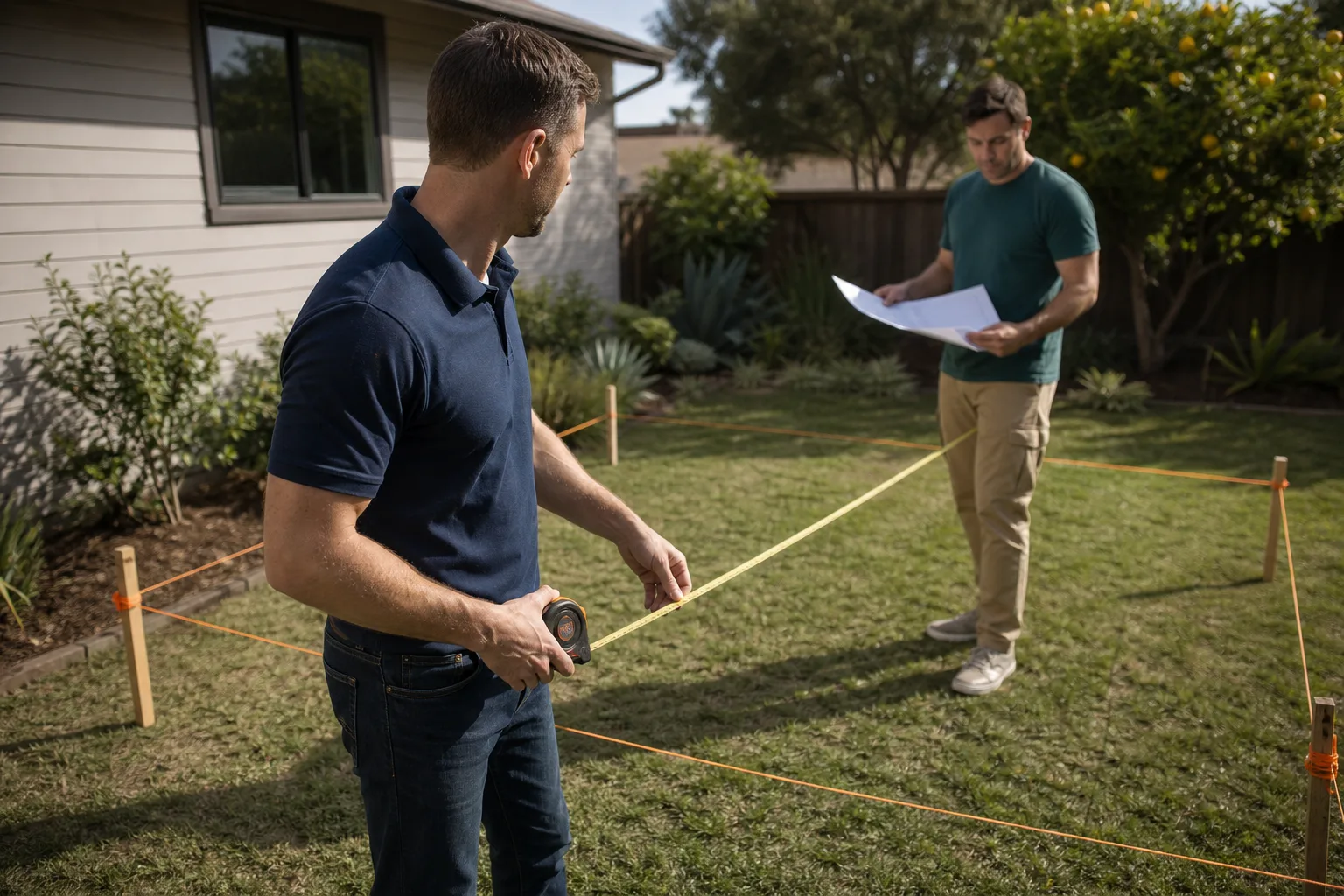
If you’re preparing to build, this documentation protocol starts before construction. We recommend homeowners photograph the site before excavation, at foundation pour, at framing completion, and at close of walls, because those four moments capture the structural system before it’s hidden. If a question ever arises about what’s behind the drywall, those photographs answer it without opening a single wall. As ADU Builders in Santa Clarita, we encourage our clients to attend these four milestones specifically to take these photos.
How Santa Clarita’s Climate Accelerates Specific ADU Failures
Santa Clarita has a climate that punishes building materials in predictable ways. The summers are long, hot, and dry, with daytime highs above 100 degrees common from June through September. The winters are mild but punctuated by cold snaps and concentrated rain. The diurnal temperature swing, sometimes 40 degrees between day and night, cycles every exterior surface through repeated expansion and contraction. All of this accelerates particular ADU failure modes.
Stucco cracking happens faster here. The thermal cycling is more extreme than in coastal Los Angeles, and stucco is brittle. Cracks that would take five years to appear in a mild climate can appear in 18 months in Santa Clarita. Most of those cracks are cosmetic, but the rate of appearance matters because it means every Santa Clarita ADU owner sees cracking early in ownership and needs to know how to sort normal from concerning.
Expansive soil is the biggest hidden risk. Large parts of Santa Clarita sit on soils with moderate to high expansion potential. When the winter rains arrive, those soils swell. When the summer heat dries them out, they shrink. The result is a slow, seasonal heaving and settling cycle that stresses foundations. ADUs built on slabs without proper soil preparation, or on raised foundations without adequate moisture barriers under the crawl space, show movement earlier in Santa Clarita than in less reactive soil regions.
Roofing and flashing degrade under intense UV. The same sun that makes Santa Clarita a desirable place to live also bakes roofing materials. Flashing sealants dry out, crack, and fail earlier than their rated lifespan suggests. Asphalt shingles lose granules faster. Metal roof coatings chalk and thin. A Santa Clarita ADU’s roof is often the first exterior system to show age, and roof failures produce the inside staining and moisture issues that homeowners mistake for plumbing problems.
What this means for your inspection routine: check the roof and flashing each fall before the rain arrives, watch for new exterior paint or stucco cracking each spring as temperatures climb, and pay attention to door and window operation during the wet months when soil movement peaks. A Garage Conversion Contractor in Santa Clarita sees the same seasonal pattern across projects: the calls come in late winter, after the rain has done its work on soil and flashing.
Common Mistakes to Avoid
- Painting over cracks without diagnosing them first. Paint hides the symptom and erases your documentation baseline. If the crack is structural, it will come back through the new paint within a season, and you’ll have lost the evidence of its original pattern.
- Assuming every crack is structural. The opposite mistake is just as costly in stress and unnecessary repair bills. Most hairline cracks in Santa Clarita ADUs are thermal movement, and the right response is documentation, not demolition.
- Ignoring a sticking door. A door that suddenly rubs or sticks is doing free diagnostic work for you. It’s telling you the building has moved. Document it, then investigate.
- Treating efflorescence with elbow grease instead of investigation. Brushing off the white powder removes the evidence, not the moisture source. The powder will return until the water path is found and fixed.
- Waiting for visible water before suspecting a leak. In Santa Clarita’s dry air, a slow leak often never produces a puddle. It produces swollen cabinet bases, darkened grout, and a musty smell. By the time water is visible, the damage is already done.
- Resetting a frozen mini-split and hoping for the best. Ice on the indoor coil or line set is a symptom of a system problem, not a fluke. Each freeze-thaw cycle stresses the compressor and invites water damage to the wall below the unit.
- Skipping the photo baseline. Without dated, measured photographs, you have no proof of when a problem appeared or whether it’s worsening. Insurance adjusters and warranty reviewers work from evidence, not recollection.
When to Call a Professional
Call a professional when any crack exceeds 1/8 inch in width, shows growth within 90 days, or appears in a foundation wall or stem wall. Call when you see efflorescence that recurs after cleaning, grout that stays dark 48 hours after use, or cabinet bases that have swollen. Call when your mini-split ices up, makes hissing sounds, or spills water down the wall below the indoor unit. Call when a door threshold changes behavior or a floor section feels soft. In Santa Clarita, these calls are the difference between a $300 sealant repair and a $30,000 structural remediation. For more guides & resources on protecting your ADU investment, visit our blog. Seedling ADU Santa Clarita offers free estimates in Santa Clarita – call (661) 362-8059 and we’ll walk the property with you.
Frequently Asked Questions
Minor cosmetic crack repairs in Santa Clarita typically run $200 to $600, while structural foundation repairs, including underpinning or pier installation, range from $8,000 to $35,000 depending on the crack’s location, the foundation type, and the soil conditions on your lot. Get a written estimate before any repair work begins, and confirm whether the warranty on your ADU still applies. Call (661) 362-8059 for a free evaluation if you’re unsure which category yours falls into.
Yes, hairline cracks under 1/16 inch are normal in a new Santa Clarita ADU, particularly during the first two years as the building materials settle and cycle through seasonal temperature changes. Document them with photos and measurements, and only take action if they widen, lengthen, or begin to affect how doors and windows operate.
You should request the seller’s documentation of the cracks, including photos, dates, and any engineer reports, and you should have a structural inspection performed before closing. Cracks that have been static for multiple years are often benign, while cracks without documentation history require professional evaluation to determine whether they’re active.
Efflorescence means water is moving through the wall material and carrying dissolved salts to the surface, which indicates a moisture source somewhere in the wall assembly, often a plumbing leak or a flashing failure. In Santa Clarita’s dry climate, efflorescence that appears without rain is more likely to be plumbing-related than weather-related, and it should be investigated rather than brushed off.
A visual foundation inspection of a typical Santa Clarita ADU takes 45 to 90 minutes and includes reviewing the exterior perimeter, interior walls and thresholds, the crawl space if one exists, and the documented crack history you’ve kept. A more detailed investigation with level measurements and soil testing, if needed, typically adds a few days for scheduling and reporting.
Structural warranties in California generally cover major structural defects for 10 years from completion, but the definition of “major structural defect” is specific, and most cosmetic cracking falls outside that definition regardless of the warranty language. Your written documentation of when the crack appeared, how wide it was, and whether it grew is the deciding factor in whether a warranty claim succeeds. Call (661) 362-8059 if you need help determining whether a crack on your ADU falls within warranty scope.
The Bottom Line
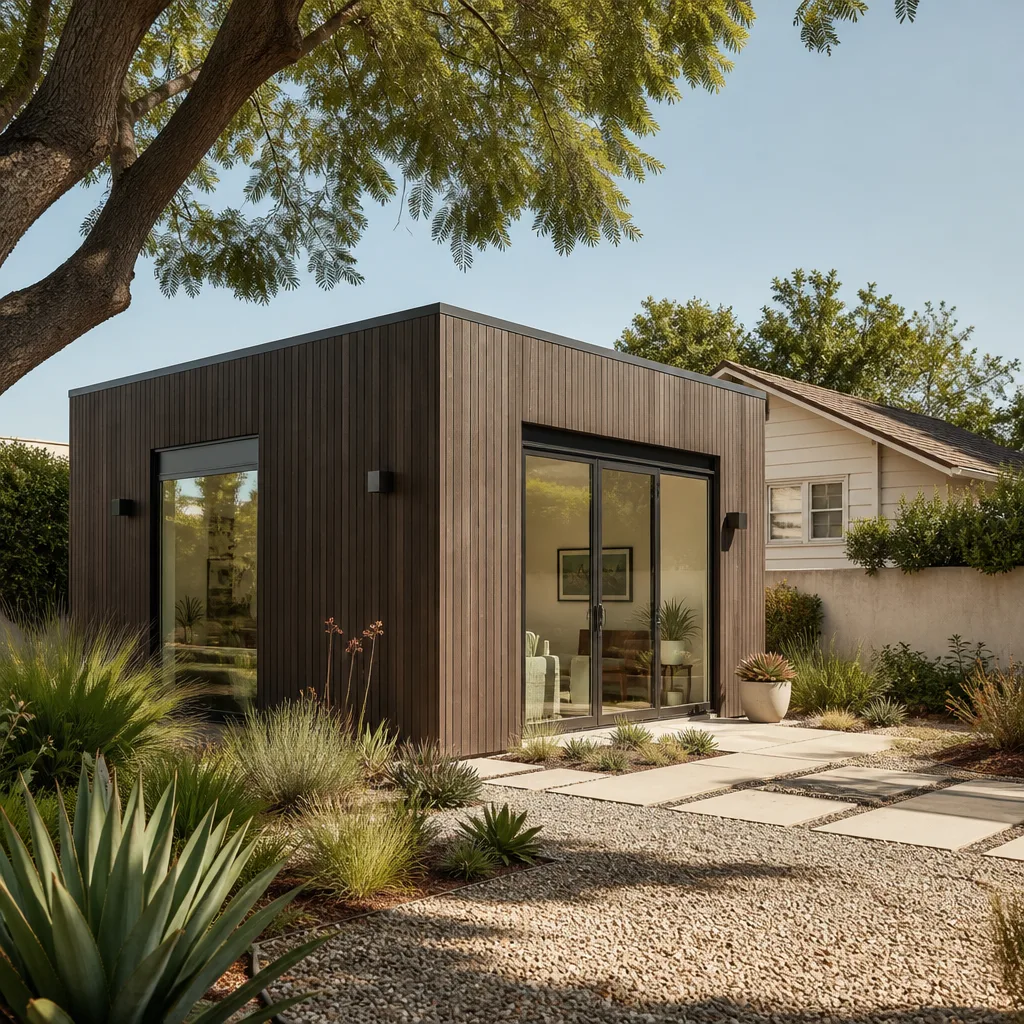
An ADU in Santa Clarita is a new home on your lot, and like any home, it talks. The cracks, the darkening grout, the sticking doors, the dripping mini-split: these are the building’s way of telling you what’s happening inside its walls and under its floors. Learning to read those signs separates the homeowners who catch problems at $300 from the ones who face them at $30,000. Document everything from day one. Measure before you panic. Call a professional when the signs point to moisture or movement rather than normal settling. And if you’re building new, choose a contractor who shows you the written price before work starts and stands behind the finished product for a full year. Home Addition Contractor in Santa Clarita work benefits from the same attention: careful documentation, honest assessment, and repairs done right the first time.
Written by Ben Ortega, Owner at Seedling ADU Santa Clarita, serving Santa Clarita since 2001.