Last updated October 15, 2026
ADU Cost Breakdown: The Santa Clarita Homeowner’s Reference for 2026
In Santa Clarita, connecting a new ADU to the city’s water and sewer system can cost anywhere from $8,000 to $28,000 depending on the distance from the main line and whether a new meter is required. That single line item appears in almost no ADU marketing materials, and it surprises a significant portion of homeowners after they’ve already committed. We wrote this The Complete Guide to ADU in Santa Clarita because the number most contractors quote in Santa Clarita is the construction cost, not the total cost. The gap between those two figures routinely runs $30,000 to $60,000. By the time you finish reading, you’ll know every cost category, what it should cost in 2026, and how to protect yourself from the omissions that wreck budgets.
Quick Answer
A detached ADU in Santa Clarita costs between $180,000 and $420,000 all-in for 2026, with most homeowners landing between $240,000 and $320,000. The figure you’ll hear quoted first, the construction cost alone, is usually $150,000 to $280,000. The difference is permits, design, utility connections, site prep, and contingency, which most quotes bury or omit entirely.
Table of Contents
- The Real Total Cost of an ADU in Santa Clarita for 2026
- Every Cost Category, Line by Line
- Why Hillside Lots in Santa Clarita Cost More
- How to Compare Contractor Bids Accurately
- The Contingency Percentage You Should Actually Carry
- Financing Costs Are a Budget Line, Not an Afterthought
- Step-by-Step: Where the Money Goes During a Santa Clarita Build
- Common Mistakes to Avoid
- When to Call a Professional
- Frequently Asked Questions
- The Bottom Line
The Real Total Cost of an ADU in Santa Clarita for 2026
Let’s start with the number you actually need. A detached one-bedroom ADU of roughly 500 square feet in Santa Clarita runs $180,000 to $340,000 all-in for 2026. A two-bedroom of 750 to 900 square feet runs $260,000 to $420,000. Garage conversions land lower, typically $120,000 to $220,000, because the shell already exists, but they carry their own costs that catch people off guard, particularly foundation upgrades and bringing older electrical panels up to code-issues we detail in our ADU Warning Signs: A Santa Clarita Homeowner’s Reference Guide.
What most homeowners hear first is the construction number. That’s the framing, drywall, roofing, windows, flooring, plumbing rough-in, electrical rough-in, and finishes. In Santa Clarita, that number sits between $150,000 and $280,000 for a detached unit. The additional $30,000 to $60,000 that doesn’t show up in marketing material is where budgets break. It’s not hidden by malice in every case. Some of it is simply outside the contractor’s scope, like utility connection fees charged by SCV Water or the city. But a contractor who doesn’t tell you about it before you sign is not helping you plan.
We’ve seen this pattern play out across Valencia, Saugus, Canyon Country, and Newhall. A homeowner gets a quote for $210,000, adds a contingency of 10 percent, feels comfortable, and then three months later discovers they need a new water meter at $12,000, a panel upgrade at $6,500, and a retaining wall at $18,000 because their lot slopes more than the contractor accounted for. The project still gets built, but the family carries stress they didn’t sign up for. This guide exists so that doesn’t happen to you.
What the Ranges Include
- Low end ($180,000 – $220,000): One-bedroom detached unit, flat lot, short utility runs, builder-grade finishes, minimal site work, existing panel has capacity.
- Mid range ($240,000 – $320,000): One- to two-bedroom detached or substantial garage conversion, moderate finishes, some grading, standard utility connections, panel upgrade included.
- High end ($340,000 – $420,000): Two-bedroom detached on a hillside lot, full grading and retaining, longer utility runs, premium finishes, upgraded HVAC, custom cabinetry.
These ranges are specific to Santa Clarita’s 2026 market. Statewide averages published by housing organizations skew lower because they blend in the Central Valley and other regions where labor and fees run cheaper. Los Angeles County adds cost at every step, and Santa Clarita’s particular mix of hillside lots, older housing stock from the 1960s through 1980s, and utility infrastructure that varies block to block pushes the number up.
For more on how we approach building in this specific market, see our overview of ADU Builders in Santa Clarita.
Every Cost Category, Line by Line
Here is the complete list. This is the framework we use with every family in Santa Clarita before any contract is signed. If a contractor’s proposal doesn’t address each of these categories, the gap between their number and your true cost is likely larger than you think.
Design and Engineering: $8,000 – $25,000
Architectural plans for a detached ADU in Santa Clarita run $8,000 to $18,000. Structural engineering adds $3,000 to $7,000 for a typical flat-lot build, more for hillside conditions. Title 24 energy compliance documentation and solar-ready calculations add another $500 to $1,500. If you work with a prefab or modular company like Abodu, Cover, or Dvele, much of the design cost is bundled into the package, which can reduce this line to $4,000 to $9,000, though you’ll still need site-specific engineering for the foundation.
City and Agency Permit Fees: $6,000 – $15,000
The City of Santa Clarita charges plan check and building permit fees based on project valuation. For a typical ADU, expect $4,000 to $9,000. School district fees apply to some projects, typically $3 to $4 per square foot, which adds $1,500 to $3,600 on a 900-square-foot unit. The city requires specific setbacks, parking considerations, and fire sprinkler analysis depending on the location of the ADU on your lot, all covered in our ADU Permits, Codes & Inspections in CA: What You Need to Know. These fees are non-negotiable and must be planned for.
SCV Water and Utility Connection Fees: $8,000 – $28,000
This is the category that surprises people. SCV Water charges connection fees that range from $8,000 on the low end when your sewer lateral and water service are close to the ADU footprint, up to $28,000 when a new water meter is required or the main line sits across the property. SoCalGas runs $1,500 to $3,000 for a typical new service. Southern California Edison work, including any panel relocation or new service drop, runs $2,000 to $6,000. These costs are set by the utilities, not your contractor, which means they appear in almost no marketing estimates, but they are real and they are unavoidable.
Grading and Site Preparation: $5,000 – $45,000
Flat-lot preparation in Valencia or Saugus with minimal tree work runs $5,000 to $12,000. A lot with moderate slope requiring a small retaining wall and some export of soil runs $15,000 to $30,000. A seriously sloped lot in areas like the hills above Canyon Country or parts of Newhall, where the grade exceeds 10 percent, can push this line to $45,000 or beyond, particularly if significant retaining walls or a pier-and-grade-beam foundation is required. This is the single largest swing factor in Santa Clarita ADU pricing, and it’s the line item we advise every homeowner to investigate before they get emotionally attached to a floor plan.
Construction: $150,000 – $280,000
This is the number everyone quotes. For a detached 500-square-foot one-bedroom, $150,000 to $190,000 in mid-range finishes. For 750 to 900 square feet with two bedrooms, $200,000 to $280,000. This includes foundation, framing, roofing, siding, windows, doors, drywall, paint, flooring, cabinetry, countertops, bathroom and kitchen fixtures, basic appliances rough-in, and a ductless mini-split HVAC system. It does not include the utility connections, permits, design, or site work listed above, and it does not include contingency.
Finishes: Included or $20,000 – $60,000 as an Upgrade
Most Santa Clarita contractors include a standard finish package in the construction number: laminate or LVP flooring, fiberglass or acrylic shower surround, stock cabinetry, laminate countertops, basic LED lighting, and standard bathroom fixtures. If you want quartz or butcher block counters, custom cabinetry, tile showers, engineered hardwood, or upgraded hardware, plan for $20,000 to $60,000 above the base number depending on the size of the unit. Prefab builders like Dvele and Mighty Buildings include a specific finish level in their package, which can simplify this, but even they offer upgrade tiers that add cost.
Landscaping and Exterior Work: $3,000 – $12,000
The city requires specific setbacks and access paths, and your homeowners association, if you have one, adds its own rules. Plan for basic exterior work: a walkway, modest plantings, and outdoor lighting. This is the category that gets cut first when budgets tighten, but it’s also the first thing a guest sees when they visit the unit, and it keeps the city happy on final inspection.
Contingency: 10% – 20% of Construction Cost
We carry 15 to 20 percent on older Santa Clarita properties and 10 to 15 percent on newer ones, and we’ll explain why in the contingency section below.
Financing Carry: $6,000 – $18,000
Interest on a construction loan during a six- to nine-month build is a real cost. We cover this in the financing section.
If you’re weighing an ADU against a different use of your existing square footage, our guide to Garage Conversion Contractor in Santa Clarita walks through the cost differences between converting and building new.
Why Hillside Lots in Santa Clarita Cost More
Santa Clarita isn’t one terrain. Valencia sits largely on flat former ranch land. Saugus and Canyon Country range from gently rolling to steep. Parts of Newhall climb into the hills. A statewide ADU cost estimate can’t see any of that, which is why we tell homeowners to treat any number that doesn’t account for their specific lot as a starting point, not a commitment.
The extra cost on a hillside lot comes from three directions. First, grading. Moving soil on a 10-percent slope costs more than moving soil on a 2-percent slope, plain and simple. You’ll pay more for excavation, more for soil export if the cut and fill don’t balance, and more for erosion control during the build. Second, foundation engineering. A flat lot uses a simple slab or shallow footings. A sloped lot may require a stepped footing, a retaining wall, or in some cases a pier-and-grade-beam system that adds $15,000 to $40,000 to the structural cost alone. Third, access. If the crew can’t reach the build site with a standard truck and trailer, you’ll pay more for material handling, whether that’s a smaller machine rental, hand excavation, or a crane.
We’ve seen retaining walls in the Canyon Country hills add $25,000 to a project that a flat-lot neighbor completed for half that. The lesson isn’t that hillside ADUs are a bad idea. They’re often the best idea, because the lot can’t support a traditional addition and the ADU opens space that would otherwise go unused. The lesson is that the lot shape has to be understood before the quote is written. A contractor who writes a number without visiting the site or without accounting for grade is guessing.
How to Compare Contractor Bids Accurately
Two bids for the same ADU on the same Santa Clarita lot can differ by $50,000, and the difference is rarely what you think. It’s not usually that one contractor is overcharging and the other is honest. It’s that the two proposals describe two different projects, and the lower number often describes less of the project.
Here is the comparison framework we recommend every homeowner use. When you receive a proposal, look for each of these categories and mark whether the line is present, absent, or vague.
- Design and engineering. Does the proposal include architectural plans? Structural engineering? Title 24? If not, who prepares these, and at what cost?
- City permits and agency fees. Is the plan check and permit fee included, listed as an allowance, or excluded entirely? An allowance means the contractor estimates the number but you pay the actual, which is normal. An exclusion means you need to find this money yourself.
- SCV Water connection. This is the one we recommend asking about specifically. “Is the SCV Water connection fee included in this proposal?” If the contractor hesitates or says they’ll look into it, put a pin in that and ask again before you sign.
- Electrical panel upgrade. Most homes built before the late 1990s have 100-amp panels. An ADU with a mini-split, kitchen appliances, and laundry will usually require an upgrade to 200 amps, which runs $4,000 to $8,000. Does the proposal mention the existing panel at all?
- Grading and site prep. Look for the specific language. “Site prep included” is not the same as “grading, soil export, and retaining wall included.” Ask for the exact scope in writing.
- Finishes. What is the specific flooring material? The specific countertop? The specific shower surround? “Mid-grade finishes” is a phrase that lets the contractor choose, and the contractor’s idea of mid-grade may not match yours.
- Contingency. Is there a contingency line, and what is the percentage? We’ll cover the right number below, but any proposal without a stated contingency is a proposal with a hidden one.
- Cleanup and protection. Does the proposal state what happens to your floors, your landscaping, your fence, and your driveway during the build? If it doesn’t, you’ll be responsible for the repair costs.
Here’s the path we recommend: ask for a written line-by-line price before any work starts. If the contractor won’t provide one, for any reason, the project carries more risk than it needs to. At Seedling ADU Santa Clarita, every family receives a written price before any tool is picked up, with no surprise line items added after the crew arrives.
The Contingency Percentage You Should Actually Carry
Most ADU cost guides tell homeowners to carry a 5 percent contingency. That’s the number that appears in generic how-to articles, and it works fine for a new build on a flat lot with no surprises. It does not work for a garage conversion on a 1970s home in Saugus where the slab turns out to be three inches thick instead of four, or a hillside lot in Newhall where the soil report reveals more rock than the visual inspection suggested.
We recommend 10 to 15 percent for most Santa Clarita ADU projects, and 15 to 20 percent for older properties, hillside lots, or garage conversions where the existing foundation and framing haven’t been exposed to daylight in fifty years. The reason is simple. The contingency is not a contractor’s profit cushion. It’s the money you’ve already set aside for the things you can’t see until the walls come off or the ground opens up. When we find a problem, we want to be able to fix it without stopping your project to have a conversation about money. A properly funded contingency funds that conversation in advance.
The realistic number is higher than the guides suggest because Santa Clarita’s housing stock skews older. Neighborhoods like older Saugus and parts of Newhall were built in the 1960s and 1970s, which means original plumbing, original electrical, and foundations that predate current code. Add a garage conversion to a house like that, and you’ll likely surface at least one condition that wasn’t visible at the quote stage.
We also recommend asking any contractor you’re considering how they handle change orders when the contingency is exhausted. The answer tells you a lot about how the second half of the project will feel. At Seedling, our approach is to surface issues early, explain the options in plain language, and never proceed with work you haven’t approved in writing.
Financing Costs Are a Budget Line, Not an Afterthought
Most ADU financing in Santa Clarita falls into three buckets: a construction loan that converts to a permanent mortgage, a home equity line of credit, or cash-out refinancing. Each has a different cost profile, and the difference between them can be $20,000 over the life of the loan. But even before the loan converts or the HELOC interest starts, the construction period itself carries a cost that most calculators don’t show.
Here’s the math. If your ADU costs $280,000 all-in and you finance $240,000 of it with a construction loan at 7.5 percent interest-only during the build, a six-month build costs you about $9,000 in interest before the project is even finished. A nine-month build at the same rate is $13,500. That number doesn’t go away. It becomes part of your basis, which means you either pay it out of pocket or it gets rolled into the loan amount. Either way, it’s money the project costs you that never appears in a contractor’s bid.
Build timelines in Santa Clarita run six to nine months for a typical detached ADU from permit submission to final inspection. City plan check takes four to eight weeks. Utility coordination with SCV Water and SoCalGas can add weeks. Construction itself is four to six months for a stick-built unit, and less for a prefab unit from a company like Cover or Abodu, assuming the foundation and utility work are complete.
The takeaway is to include the interest carry as its own line in your budget. Call it $6,000 to $18,000 depending on your loan size and timeline. If you’re comparing a $260,000 stick-built quote against a $250,000 prefab quote, factor in that the prefab may finish two months sooner and save you $3,000 to $5,000 in carry. That starts to narrow the gap.
For projects that go beyond an ADU, our Home Addition Contractor in Santa Clarita guide covers how financing changes when you’re building attached square footage instead of a freestanding unit.
Step-by-Step: Where the Money Goes During a Santa Clarita Build
Here’s the order in which money leaves your budget, based on the way we run projects in Santa Clarita. Understanding the sequence helps because the biggest costs arrive at specific moments, not evenly across the timeline.
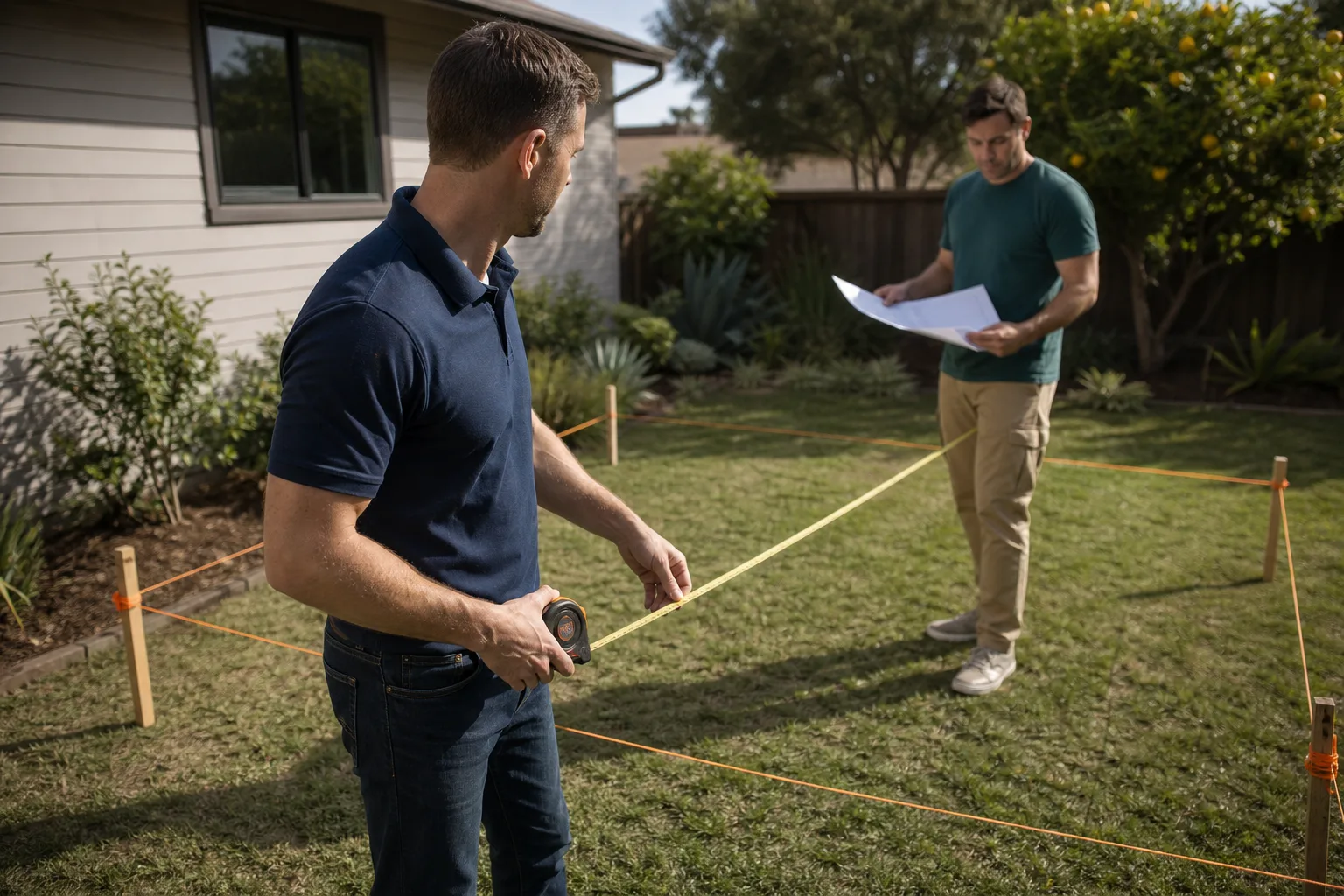
- Site evaluation and feasibility (0 – 3 weeks): We walk the lot, review the city’s zoning rules for your parcel, check utility locations, and give you a realistic range before you spend money on plans. This step should cost you nothing.
- Design and engineering (4 – 10 weeks): Architectural plans, structural engineering, Title 24. You’ll pay the design team at this stage, typically in two or three installments.
- Plan check and permits (4 – 8 weeks): The city reviews the plans, asks for revisions, and eventually issues the permit. You’ll pay plan check and permit fees when you submit, not when you break ground.
- Utility applications (concurrent with plan check): SCV Water connection application, SoCalGas request, Edison service upgrade. These fees are due before the utilities will schedule work, which means before the construction loan typically funds.
- Site work and foundation (2 – 6 weeks): Grading, trenching for utilities, foundation pour. This is where hillside lots run into their unique costs.
- Framing and shell (3 – 6 weeks): Walls up, roof on, windows and doors in. The building starts to look like a home.
- Mechanical rough-in (2 – 4 weeks): Plumbing, electrical, and HVAC in the walls before drywall goes up. City inspection at this stage.
- Insulation and drywall (2 – 3 weeks): The unit becomes enclosed and quiet.
- Finishes (4 – 8 weeks): Flooring, cabinetry, countertops, tile, paint, fixtures, and appliances. This is where upgrade choices from the finishes category become physical.
- Site work and landscaping (1 – 3 weeks): Walkways, plantings, exterior lighting, and cleanup.
- Final inspection and closeout (1 – 2 weeks): City final inspection, utility sign-offs, and the certificate of occupancy.
At Seedling ADU Santa Clarita, our crew follows the Cedarwell Care Promise on every visit: shoe covers and drop cloths inside the home, pet-safe products where there’s a choice, a photo of the clean-up before the crew leaves each day, and a live person available by phone 24/7 throughout the project. The way a contractor protects your home during these phases matters as much as the phases themselves.
Common Mistakes to Avoid
- Budgeting for the quote, not the project. The construction number is about 75 percent of your true cost. If you build your financing around the quote, you’ll run short before the finishes go in.
- Signing a proposal that excludes utility connections. Ask specifically about SCV Water connection fees. This is the single most commonly omitted line item in Santa Clarita ADU proposals, and it’s the least optional cost in the project.
- Skipping the site visit before agreeing to a number. No contractor can accurately price a Santa Clarita lot from satellite images. If the number predates the site visit, treat it as a placeholder.
- Choosing finishes without seeing physical samples. “White oak” in a catalog and “white oak” in your bathroom under Santa Clarita’s afternoon light are different materials. Look at the sample in the space before you commit.
- Underfunding the contingency on an older home. A 1960s plumbing stack or an original electrical panel will not announce itself until the project is underway. Carry 15 to 20 percent on older properties and hillside lots.
- Ignoring the construction loan interest carry. A six-to-nine-month build at today’s rates costs $6,000 to $18,000 in interest before the ADU is even rentable. Include it in the budget.
- Not understanding the 365-day promise before signing. Ask any contractor what happens when something fails a year after closeout. The answer should be specific, in writing, and delivered without hesitation.
When to Call a Professional
You should call a professional when you’re ready to move from range to specific number. That means after you’ve reviewed this guide, after you’ve walked your lot and thought about whether it’s flat or sloped, and after you’ve checked whether your panel is 100 or 200 amps. At that point, a good ADU builder will walk the property with you, answer every question on the eight-point bid comparison list above, and give you a written price before any commitment. If you’re unsure whether an ADU fits your lot, or whether a garage conversion makes more financial sense than a detached build, that’s exactly the conversation to have early, and you can find more guides & resources on our blog to help prepare. Seedling ADU Santa Clarita offers free estimates in Santa Clarita, call (661) 362-8059.
Frequently Asked Questions
The total cost of a detached ADU in Santa Clarita in 2026 runs $180,000 to $420,000 all-in, with most projects landing between $240,000 and $320,000. This includes design, engineering, permit fees, utility connection fees, grading, construction, finishes, and contingency. Garage conversions run $120,000 to $220,000. Call (661) 362-8059 for a free estimate specific to your lot.
SCV Water connection fees for an ADU in Santa Clarita run $8,000 to $28,000 depending on the distance from the main line and whether a new water meter is required. This is a utility charge, not a contractor charge, and it appears in almost no marketing estimates. Ask specifically whether the proposal includes it before you sign.
A garage conversion in Santa Clarita costs $120,000 to $220,000 all-in for 2026, including permits, utility work, insulation, finishes, and any foundation or panel upgrades. Older homes in Saugus and Newhall with original foundations and 100-amp panels tend to land on the higher end. The shell already exists, which saves money, but the upgrades required to bring a 50-year-old garage to code can offset much of that savings.
A detached ADU in Santa Clarita takes six to nine months from permit submission to final inspection. Plan check runs four to eight weeks, utility coordination with SCV Water and SoCalGas adds several weeks, and construction itself is four to six months for a stick-built unit. Prefab units from builders like Abodu or Cover can shorten the construction phase once the foundation is complete.
Carry 10 to 15 percent contingency for most Santa Clarita ADU projects, and 15 to 20 percent for older properties, hillside lots, or garage conversions where the existing foundation and framing haven’t been exposed in decades. The 5 percent figure in many online guides assumes a flat lot and new construction, which most Santa Clarita projects are not.
Yes, a permit is required for every ADU and garage conversion in Santa Clarita, along with plan check approval, Title 24 energy compliance, and coordination with SCV Water, SoCalGas, and Southern California Edison. Plan check and permit fees run $4,000 to $9,000 for a typical ADU. The city also requires specific setbacks and parking considerations depending on your parcel.
The Bottom Line
An ADU in Santa Clarita is a real, four-to-six-figure investment in your property, and the families who build comfortable budgets do so by understanding every line item before the first shovel goes in. Know the difference between construction cost and total cost. Know what SCV Water will charge to connect your unit. Know what your lot’s grade will cost you in grading and foundation work. Carry a contingency that matches your home’s age and your lot’s shape. And choose a builder who puts all of it in writing before you commit. If you’re ready to talk numbers, call (661) 362-8059 for a free estimate.
Written by Ben Ortega, Owner at Seedling ADU Santa Clarita, serving Santa Clarita since 2001.