Last updated October 15, 2026
DIY vs Professional ADU: The Santa Clarita Homeowner’s Decision Guide
Here’s a number most ADU guides won’t tell you: in California, an owner-builder who completes major work on an accessory dwelling unit and then sells within one year triggers a legal presumption that the work was done “for sale,” which under Business and Professions Code 7044 is a misdemeanor. That single provision changes the entire Santa Clarita DIY calculation. What looks like sweat equity on YouTube is, in many cases, a liability transfer you’re making from a licensed contractor’s insurance policy onto your own homeowners policy, your own resale timeline, and your own legal exposure. This guide walks through what Santa Clarita homeowners can legally self-perform, what requires a license, and what the real cost difference looks like when you account for time, permits, insurance, and the eventual sale of the home. For how to hire a ADU contractor in Santa Clarita: a step-by-step guide, see our related resource. We’ll cover the actual CSLB classifications, how unpermitted work affects insurability, and the places where genuine DIY involvement makes sense without risking the project.
Quick Answer
For most Santa Clarita homeowners, a hybrid approach is the rational choice: hire a licensed contractor for the structural, electrical, plumbing, and mechanical scope (which California law effectively requires), and reserve DIY work for finish elements like painting, landscaping, cabinet installation, and trim. A fully DIY-managed ADU in Santa Clarita typically saves 15 to 25 percent on paper, but often costs more than that in time, financing friction, and resale complications, especially when unpermitted work sits on the property record. A fully contracted ADU through a company like Seedling ADU Santa Clarita home costs more upfront but transfers liability, permit coordination, and the construction warranty to a licensed entity.
Table of Contents
- The Legal Boundary: What California Actually Lets You Self-Perform
- Insurance During Construction and After: The Coverage Gap Nobody Mentions
- Resale Disclosure: What You Must Tell Buyers About Your ADU
- Where DIY Genuinely Works: Finish Work Without Legal Risk
- The Real Cost Model: DIY-Managed vs. Fully Contracted in Santa Clarita
- Permit Coordination and Inspections: The Hidden Time Tax
- Common Mistakes to Avoid
- When to Call a Professional
- Frequently Asked Questions
- The Bottom Line
The Legal Boundary: What California Actually Lets You Self-Perform
California Business and Professions Code section 7044 states that an owner-builder may construct a single-family residential structure for their own occupancy without holding a contractor’s license. On its face, that sounds like a green light for a DIY ADU. The catch sits three paragraphs deep: the work must be for your own residence, you must reside in the structure for at least one year after completion, and you cannot hire more than one unlicensed helper. More critically, any trade work that requires a separate license classification, specifically electrical (C-10), plumbing (C-36), HVAC (C-20), and roofing (C-39), cannot be self-performed by an owner-builder at all. You must hire licensed subcontractors for those scopes, or have a licensed general contractor (B) manage them.
What this means in Santa Clarita practice is that the “DIY ADU” category is much narrower than most online content suggests. You can self-perform framing, drywall, painting, flooring, and general carpentry, if you have the skill and the patience. You cannot legally self-perform the electrical panel upgrade, the sewer connection, the gas line extension, or the HVAC system that virtually every habitable ADU in Santa Clarita requires. Los Angeles County, which governs building permits for unincorporated Santa Clarita areas and works in tandem with the city of Santa Clarita’s building division, enforces these classifications during plan review. The plans examiner will require a licensed electrician and plumber of record on the permit application for any new service, any subpanel, any waste line connection, and any water heater installation. That is not a guideline. It is a condition of permit issuance.
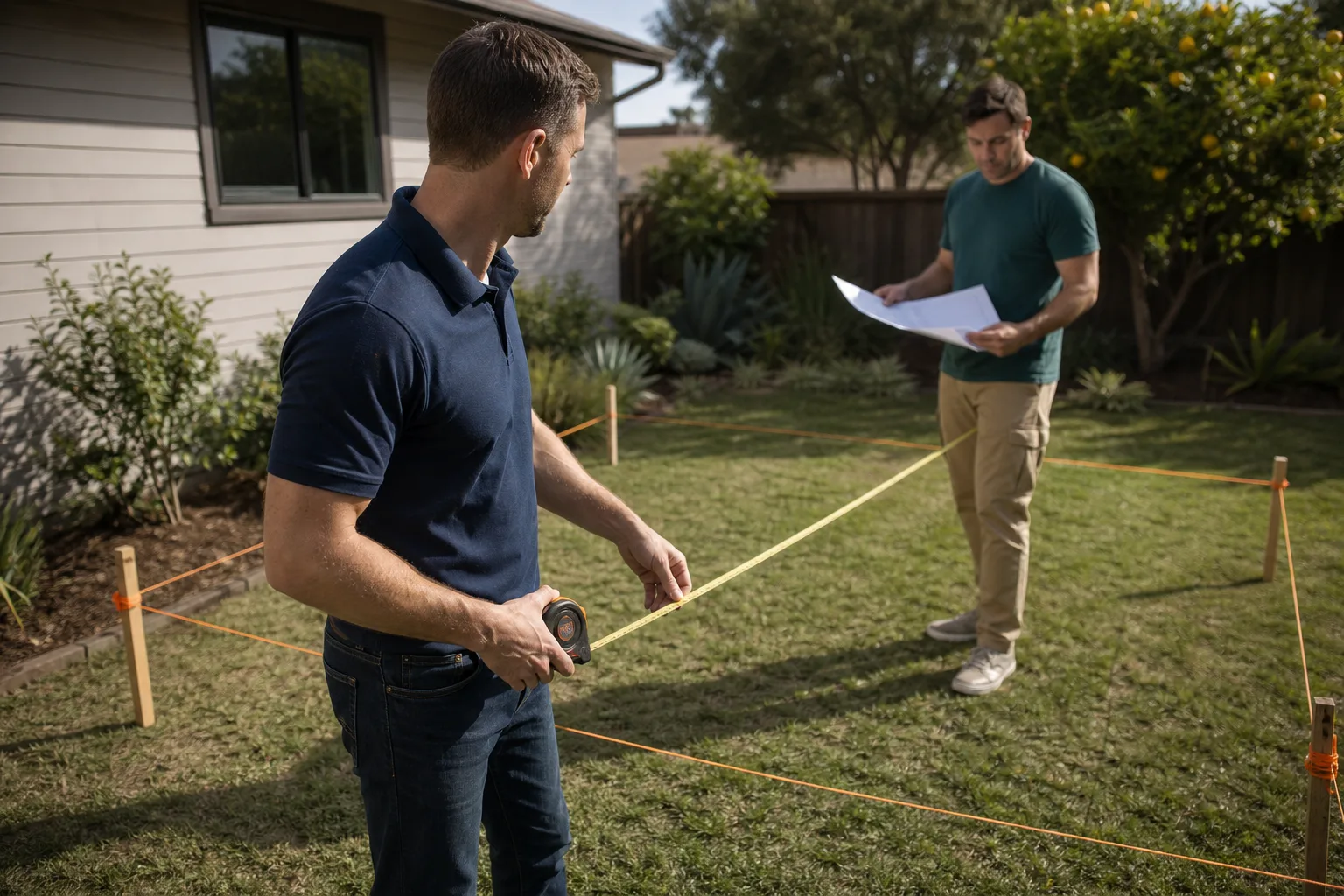
The practical result is that a Santa Clarita owner-builder ADU is really an owner-managed ADU. You are the general contractor in function: you hire the licensed subs, you schedule inspections, you pull permits under your own name, and you absorb the liability if a worker is injured on site. A licensed contractor carries workers’ compensation insurance and general liability coverage. An owner-builder does not, unless you purchase an owner-builder liability policy, which most Santa Clarita homeowners discover only after asking the wrong question of the wrong person. Ben Ortega at Seedling ADU Santa Clarita has seen more than one project stall because the homeowner did not realize their standard homeowners policy excludes construction activity.
Insurance During Construction and After: The Coverage Gap Nobody Mentions
A standard homeowners insurance policy is not a construction insurance policy. It covers the dwelling as occupied. When you pull permits for an ADU and start structural work, major demolition, or a garage conversion, your policy’s exclusions activate. Most carriers consider an active construction site a material change in risk. If you do not notify your insurer or purchase a builder’s risk policy during construction, a fire, water event, or worker injury connected to the ADU work may not be covered. That is a gap many Santa Clarita homeowners learn about the hard way. A licensed ADU contractor carries its own general liability and workers’ compensation policies, so the contractor’s policy responds first during the build. See our seasonal ADU care for Santa Clarita: year-round homeowner’s guide for ongoing maintenance after construction. An owner-builder has no such policy unless they specifically buy one, and those policies are not cheap and not automatic.
After completion, the insurance conversation shifts. A permitted, inspected, and code-compliant ADU is insurable as part of the property. An unpermitted ADU or one with improper trade work is a different animal. When you file a claim involving the ADU, the carrier may investigate whether the work was permitted. If it was not, the claim may be denied and the policy may be non-renewed. In Santa Clarita, where many homes have detached garages originally built decades ago, unpermitted garage conversions are one of the most common insurability problems we encounter. The structure may look finished, but the electrical work, the plumbing stub, and the insulation were never inspected. Insurers have access to permit records. They check.
The City of Santa Clarita and Los Angeles County planning departments also have code enforcement mechanisms for unpermitted ADUs, especially in areas where neighborhood parking or second-dwelling complaints come in. The fix is rarely to ignore it; it is to legalize the structure, which means opening walls for inspection, upgrading electrical, and paying fees that were never paid. This is a significant cost that often exceeds what the original savings were. A professional Garage Conversion Contractor in Santa Clarita manages permits from day one, which keeps the property insurable and the work inspectable without wall demolition later.
Resale Disclosure: What You Must Tell Buyers About Your ADU
California’s real estate disclosure requirements are aggressive, and Santa Clarita sits in a real estate market where ADUs are common enough that buyers, their agents, and their lenders know what to check. The California Association of Realtors transfer disclosure statement requires sellers to disclose any room additions, modifications, garage conversions, or accessory structures that may have been constructed without permits or with unresolved code issues. The penalty for non-disclosure is a misrepresentation claim. Listing the ADU as “bedroom” living space when it was never permitted is the fastest way to get a canceled escrow and a threatened lawsuit. Santa Clarita is not a market where agents will overlook an unpermitted ADU; they will price for it or pass.
Buyer financing changes the equation. Lenders underwriting an FHA, VA, or conventional loan for a Santa Clarita property with an unpermitted ADU may not count the unpermitted square footage toward the appraised value, which collapses the borrower’s loan-to-value ratio and may kill the deal. Buyers using cash may proceed, but they will discount the offer by the cost of legalizing or demolishing the structure, often more than the savings the seller thought they captured by skipping permits. A properly permitted ADU built by a licensed ADU Builders in Santa Clarita adds title-verified square footage and usually commands a higher per-square-foot price. Junior ADUs and garage conversions have specific ADU-specific disclosure rules under California law. The seller must state whether the ADU is permitted, whether it was built under the owner-builder provision, and if the one-year occupancy requirement has been met.
What this means for the DIY decision is straightforward: the DIY portion of the project, if you touch structural, electrical, or plumbing work without permits, converts from a savings to a disclosure liability at the exact moment you list the home. That is a poor trade. The professional route produces permits, inspection records, and a property file that sells cleanly. In our experience in Santa Clarita, the listing conversation between agent and homeowner goes differently when the answer to “is the ADU permitted?” is yes.
Where DIY Genuinely Works: Finish Work Without Legal Risk
The honest conversation about DIY and ADUs is not “never do anything yourself.” It is “do the right things yourself.” California law and building codes draw a bright line between trade work and finish work. Trade work affects structure, life safety, water, power, gas, and drainage. Finish work affects appearance and livability. The line is where your DIY energy should go.
Here is the sequence we recommend for Santa Clarita homeowners who want genuine hands-on involvement without crossing into licensed trade territory:
- After framing inspection, before drywall: You can run low-voltage wiring for networking and audio, install blocking for shelves and TV mounts, and place insulation batts (Santa Clarita’s Title 24 energy requirements are strict, so verify the insulation type with your contractor first).
- After drywall and painting: You can install baseboards, door casings, window trim, and interior doors yourself. This is finish carpentry, no license required.
- After final plumbing and electrical inspection: You can install faucet trim, light fixtures to existing junction boxes, towel bars, shelving, and closet systems. Replacing a fixture on an existing box is not electrical work requiring a license; adding a circuit is.
- Cabinet installation: Kitchen and bath cabinet installation is finish work. You can do it. Note: the plumbing connections for the sink, the electrical for the dishwasher, and the gas line for the range are not. Those stay with the licensed subs.
- Landscaping and exterior finish: Planting, irrigation (residential, low-voltage), pavers, and fencing are DIY-friendly. In Santa Clarita’s dry climate, choose drought-tolerant plantings, and coordinate with any drainage plan the permit required. Some Santa Clarita ADU permits have landscape-condition requirements, so check before planting.
- Painting: Interior and exterior painting is fully DIY. It is also one of the two highest-visibility finishes on the project. Done well, it reduces cost without reducing quality. Done hurriedly, it is the first thing buyers notice. This is where patient labor pays.
One more note on sequencing. Santa Clarita building inspections are scheduled by the contractor, and they happen at specific points: foundation, rough framing, rough electrical/plumbing/mechanical, insulation, drywall, and final. If DIY finish work intrudes into an inspection zone before it has been signed off, you trigger a correction. Keep finish work sequential, after the relevant inspection passes. This preserves the permit timeline and keeps the project moving. A company like Seedling ADU Santa Clarita can set the inspection schedule and tell you exactly when each DIY window opens and closes, which is practical value for a homeowner playing a hybrid role. For home addition contractor maintenance checklist for Santa Clarita homeowners, review our detailed checklist.
The Real Cost Model: DIY-Managed vs. Fully Contracted in Santa Clarita
Santa Clarita ADU costs are consistently in the range of $250 to $450 per square foot for a new-build detached unit, with garage conversions typically landing between $100 and $200 per square foot depending on condition of the existing slab, roof, and utilities. A 500-square-foot one-bedroom ADU in Santa Clarita now lands between $175,000 and $300,000 when built by a licensed contractor with permits, plans, and all trade work included. That is the market baseline for a turnkey unit.
An owner-builder-managed project in Santa Clarita, where you hire the subs directly and purchase materials yourself, may come in 15 to 25 percent lower in hard costs. That is the number most homeowners see and chase. The number they do not see is the cost of their own time: permit application preparation, plan review comments, engineering letters, utility connection applications, schedule coordination among three to six subs, inspection scheduling, material procurement, and correction work after failed inspections. On a Santa Clarita ADU, owner-builder management typically consumes 15 to 25 hours per week during active construction for four to seven months. If you value your time at $50 to $100 per hour, which is not an aggressive rate for a Santa Clarita homeowner in the 30-to-50 age range, the owner-builder time cost is $15,000 to $50,000. That erases most of the hard-cost savings.
Here is a side-by-side model for a 500-square-foot detached ADU in Santa Clarita with a mid-grade finish level:
- Plans and engineering (required either route): $8,000 to $15,000. Owner-builder pays this directly. Contractor includes it in contract price.
- Permit and impact fees (required either route): $5,000 to $12,000 in Santa Clarita, depending on school district fees and utility connection. Owner-builder pays directly. Contractor passes through.
- Materials (difference): Owner-builder buys retail, shops sales, and may save 5 to 10 percent. Contractor buys at trade pricing but marks up 10 to 20 percent. Net difference: owner-builder saves roughly 10 to 15 percent on materials, but assumes the cost of mistakes, returns, and surplus materials.
- Trade labor (difference): Owner-builder hires subs at market rate with no contracting discount. Contractor hires subs at repeat-customer pricing. Net difference is minimal.
- Management overhead (difference): Owner-builder absorbs their own time. Contractor charges 15 to 25 percent for general conditions, supervision, scheduling, and warranty. On a $200,000 project, that is $30,000 to $50,000, which is the owner’s real cost of shifting the entire administrative burden off their plate.
The fully contracted path in Santa Clarita through Home Addition Contractor in Santa Clarita produces a fixed written price before any work starts. The owner-builder path produces a variable price that shifts with subcontractor quotes, material availability, inspection corrections, and the homeowner’s own learning curve. In many cases we have reviewed, the all-in cost lands within 5 to 8 percent of each other. The difference is not money. It is risk, time, and warranty.
Permit Coordination and Inspections: The Hidden Time Tax
Santa Clarita building permits for ADUs run through the city’s building and safety division for homes inside city limits, and through Los Angeles County for county pockets. Both jurisdictions have adapted to the state’s ADU streamlining mandates, and plan review times have shortened meaningfully in the last five years. An ADU permit in Santa Clarita now typically takes 4 to 12 weeks from submittal to issuance, depending on plan completeness, engineering requirements, and utility coordination. Owner-builders often add 4 to 8 weeks to that timeline because their first submission lacks the specific details the plans examiner needs. A contractor who builds ADUs repeatedly in Santa Clarita knows which details the examiner wants on the first pass, which is a quiet efficiency that saves real calendar time.
Inspections are the second hidden tax. Santa Clarita ADU builds require a sequence of inspections: pre-construction, foundation or slab, underfloor, rough frame, rough electrical, rough plumbing, rough mechanical, insulation, drywall, and final. Each inspection requires a scheduled window, a job site that is ready, and a person present to host the inspector. Missed inspections cost days. Failed inspections cost corrections and reinspection fees. An owner-builder juggling these alongside a full-time job and family obligations routinely loses two to three weeks to scheduling friction. A licensed contractor’s superintendent treats the inspection calendar as a primary responsibility, not a side task.
There is also the question of what happens when the inspector flags something the homeowner does not understand. In Santa Clarita, correction notices come with code citations. A contractor can respond with the correction the same day. A homeowner often needs to research what the code requires, call the inspector back for clarification, and then coordinate the correction. Each cycle is another week gone. In a project lasting four to seven months, these compounding delays are the difference between a fall completion and a spring completion.
Common Mistakes to Avoid
- Treating a garage conversion as “just finishing a room.” A Santa Clarita garage conversion changes a non-habitable structure into a habitable one, which requires foundation verification, insulation, ventilation, electrical, and often a plumbing extension. Skipping permits turns the project into an uninsurable, undisclosable liability.
- Self-performing electrical work that requires a C-10 license. Anything beyond swapping a fixture on an existing box needs a licensed electrician. This is a life-safety issue and an insurance exclusion. The high-tension work is not a hobby zone.
- Underestimating Santa Clarita’s Title 24 energy requirements. The California energy code is enforced strictly in Santa Clarita. Insulation values, window performance, HVAC sizing, and solar-readiness all require compliance. Owner-builders who wing it get plan review rejections and final inspection failures.
- Not buying a builder’s risk policy during an owner-builder project. Your standard homeowners policy will not cover a construction loss. If a fire starts during a DIY ADU build and you have not purchased the right coverage, the loss is yours.
- Running DIY finish work ahead of inspections. Drywalling before the rough electrical, plumbing, and mechanical inspections are signed off hides the work the inspector needs to see. In Santa Clarita, that means opening the walls again, paying the reinspection fee, and losing the trust of the department.
- Hiring the cheapest sub without verifying licensure or workers’ compensation. The California Contractors State License Board has a free license lookup. A sub without workers’ comp coverage exposes you to a claim if they are injured on your property. Verify every sub, every time.
- Assuming the ADU will add square footage to the county assessor’s record automatically. A permitted ADU triggers reassessment of the improvement. An unpermitted ADU does not generate tax revenue and may trigger a supplemental assessment when discovered, plus penalties. The “saving” from unpermitted work is a deferred tax bill waiting for a bad moment.
When to Call a Professional
If your ADU involves a new foundation, structural framing, electrical service, a gas line, or sewer connection, the law has already answered the DIY question: you need licensed professionals for that scope. If the idea of managing permit submittal, plan review comments, scheduling six subcontractors, and coordinating ten inspections during a Santa Clarita summer while your kids are home from school sounds like a second full-time job, the professional route is the better use of your energy. If your timeline matters, if your resale value matters, and if you want someone to call when the inevitable question comes up mid-project, a licensed ADU contractor is the answer. Seedling ADU Santa Clarita offers free estimates in Santa Clarita, with written pricing before any work starts, and the 365-Day Done Right Promise backing the finished unit. Call (661) 362-8059 to talk through your lot, your goals, and which parts of the project you can genuinely enjoy doing yourself.
Frequently Asked Questions
California’s owner-builder provision allows you to act as the general contractor for a single-family residential project on your own property, including an ADU, but it does not allow you to self-perform electrical, plumbing, HVAC, or roofing work; those scopes require licensed subcontractors. In Santa Clarita, the building department will require a licensed electrician and plumber of record on the permit for any new ADU. If your ADU includes any structural, electrical, plumbing, or mechanical work, which virtually every livable ADU does, your DIY role is really a project management role, not a hands-on construction role for the full scope.
A licensed-contractor-built 500-square-foot detached ADU in Santa Clarita typically runs $175,000 to $300,000, while a DIY-managed project with the same scope often lands 15 to 25 percent lower in hard costs, or roughly $130,000 to $240,000. When you add the owner-builder’s time commitment of 15 to 25 hours per week for four to seven months and the cost of builder’s risk insurance, corrections, and scheduling delays, the all-in difference narrows to a few percentage points on many projects. Call (661) 362-8059 for an exact Santa Clarita quote.
You must disclose the unpermitted ADU on the California transfer disclosure statement, and failure to do so exposes you to misrepresentation claims from the buyer. The buyer’s lender will likely exclude the unpermitted square footage from the appraisal value, which can collapse financing and kill the deal. Cash buyers will discount the offer by the cost of legalizing or removing the ADU, which in Santa Clarita often exceeds the original permit savings.
No. A standard homeowners policy excludes active construction activity, so a fire, water event, or worker injury during an owner-builder ADU project may not be covered unless you purchase a builder’s risk policy and notify your insurer. A licensed contractor carries its own general liability and workers’ compensation coverage, so the contractor’s policy responds first. After completion, an unpermitted ADU can cause claim denials and policy non-renewals when the carrier discovers the work wasn’t permitted.
You can self-perform finish work like painting, trim, baseboards, cabinet installation, closet systems, shelving, low-voltage wiring, insulation (with plan approval), and landscaping. You cannot legally self-perform electrical, plumbing, HVAC, gas, or roofing work, and structural framing is inadvisable without significant experience. The sequence matters: do DIY finish work only after inspections pass, and never cover work that an inspector needs to see. If you want to know exactly where the DIY line sits on your lot, call (661) 362-8059 and ask to talk through the project scope.
Yes, prefab and modular ADUs from brands like Plant Prefab and Boxabl go through the same Santa Clarita building and planning review process as site-built ADUs, with plan submittal, engineering review, and site inspections. Some prefab manufacturers provide their own engineering packages, which can shorten plan review, but the foundation, utility connections, and final inspection are handled locally. A contractor who works hands-on with these brands can coordinate the factory schedule with the on-site schedule, which matters when you are planning a Santa Clarita build around school-year logistics. Seedling ADU Santa Clarita works with Plant Prefab, Boxabl, Tuff Shed, and James Hardie materials, so you can compare options directly.
The Bottom Line
The DIY-versus-professional ADU question is not a test of your capability. It is a question about where you want to hold the liability, who manages the permit record, and what the property looks like when the buyer’s inspector walks it. In Santa Clarita, the honest answer for most homeowners is a hybrid: bring in a licensed contractor for the foundation, structure, power, water, gas, and inspections, and take on the finish work you enjoy. The cost difference between that path and a fully DIY-managed project is often less than the time cost of managing it yourself, and you preserve the insurability, financing, and resale value of the home. Know the law, buy the right coverage if you self-manage, and call a professional before you open walls. Explore more guides & resources on our blog. For a written price on your Santa Clarita ADU before any work starts, call Seedling ADU Santa Clarita at (661) 362-8059.
Written by Ben Ortega, Owner at Seedling ADU Santa Clarita, serving Santa Clarita since 2001.